

Why 1–2 Marks Decide RRB Group D Selection More Than Hard Questions
Introduction: The Harsh Reality of Railway Exams
In RRB Group D, thousands of aspirants walk out of the exam hall feeling confident. The paper feels manageable, questions look familiar, and attempts are high. Yet, when results are declared, many candidates miss selection by just 1 or 2 marks.
This leads to a common question: “If the paper was easy, why did I not qualify?”
The answer lies in understanding how competition density, not question difficulty, decides selection in RRB Group D.
RRB Group D Is a High-Density Exam
RRB Group D is not about scoring exceptionally high marks. It is about scoring slightly better than others.
- Lakhs of candidates compete for limited vacancies
- Most questions are basic and syllabus-oriented
- A large number of candidates score within a narrow mark range

When the majority performs well, even a small mistake becomes decisive. That is why 1–2 marks often decide whether a candidate is selected or rejected.
Easy Questions Increase the Risk, Not Reduce It
Many aspirants assume that hard questions decide cut-offs. In reality, easy questions create tougher competition.
Here’s why:
- Easy questions lead to higher attempts
- Higher attempts increase average scores
- Score difference between candidates becomes very small
In such a situation, selection depends on avoiding mistakes in easy questions, not solving the toughest ones.
The 1–2 Mark Gap: Where Does It Come From?
Candidates usually lose these crucial marks due to:
- Silly calculation errors
- Guessing one extra question incorrectly
- Skipping a basic General Science question
- Poor time management in the last section
None of these are related to tough questions. They are execution errors, not knowledge gaps.
Normalisation Makes Small Differences Bigger
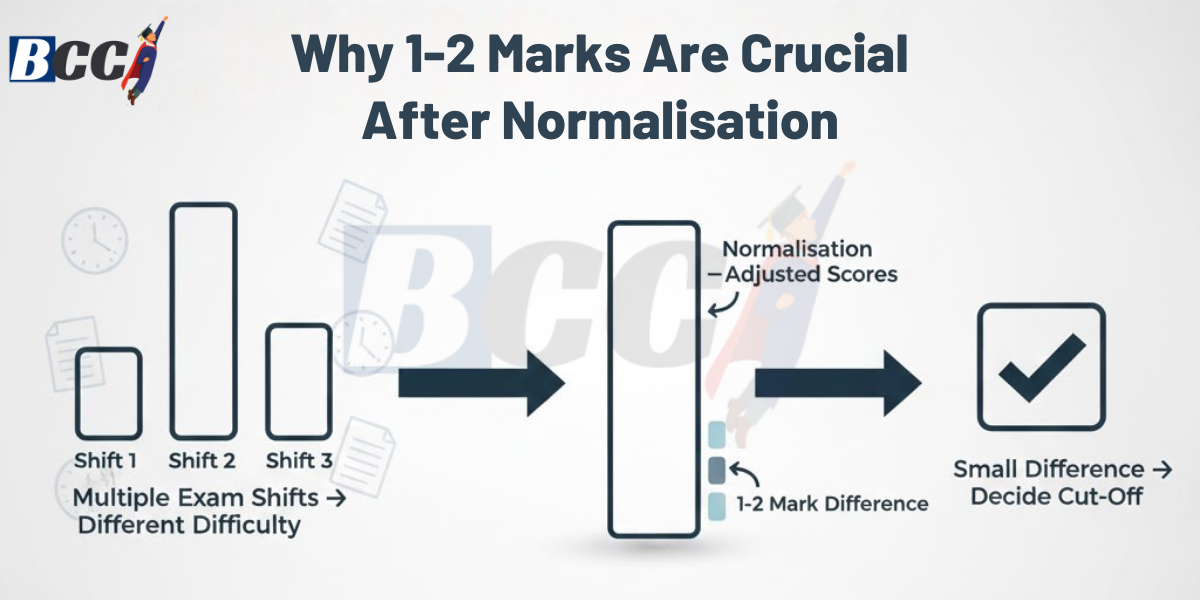
RRB Group D exams are conducted in multiple shifts. Normalisation is applied to ensure fairness across shifts.
What aspirants often ignore:
- Raw marks are not final marks
- Performance is compared relative to others in the same shift
- Easy shifts have higher average scores
In easy shifts, scoring 1–2 marks less than the average can push a candidate below the cut-off after normalisation.
Accuracy Alone Is Not Enough
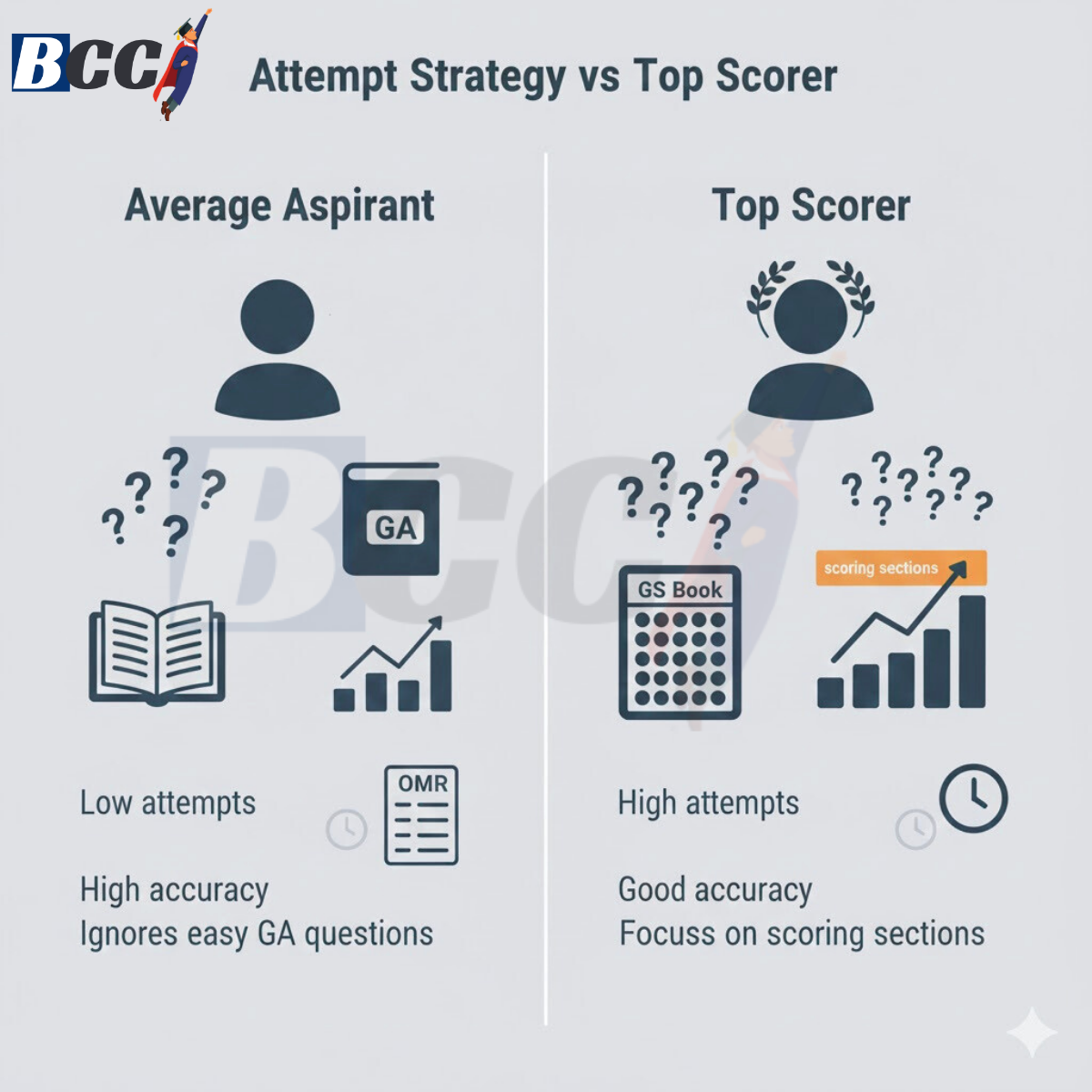
Many aspirants focus only on accuracy and play it safe by attempting fewer questions. This strategy backfires in easy papers.
In RRB Group D:
- High attempts with controlled accuracy outperform low attempts with perfect accuracy
- Leaving easy questions unattempted is more damaging than a calculated risk
Top scorers balance speed, accuracy, and attempt volume. Average aspirants often focus on only one.
General Science: The Silent Cut-Off Decider
General Science and General Awareness often decide final selection.
Reasons:
- Questions are mostly factual
- Syllabus is limited and repetitive
- Most candidates score well here
Missing 2 GS questions can cost more than getting a tough Maths question wrong. That is why GS revision plays a major role in clearing the cut-off.
Mock Tests Hide the Real Competition
Mock tests are useful, but they do not reflect actual competition levels.
- Mock test crowd is limited
- Real exam includes lakhs of serious candidates
- Cut-offs in mocks are misleadingly low
Candidates who focus only on mock scores often fail to realise where they are losing marks.
Mock analysis is more important than mock marks.
Hard Questions Rarely Decide Group D Selection
In RRB Group D:
- Hard questions are attempted by very few
- They do not significantly affect cut-offs
- Selection depends on the common questions attempted by everyone
So, spending excessive time mastering very difficult questions gives low returns.
What Actually Improves Selection Chances
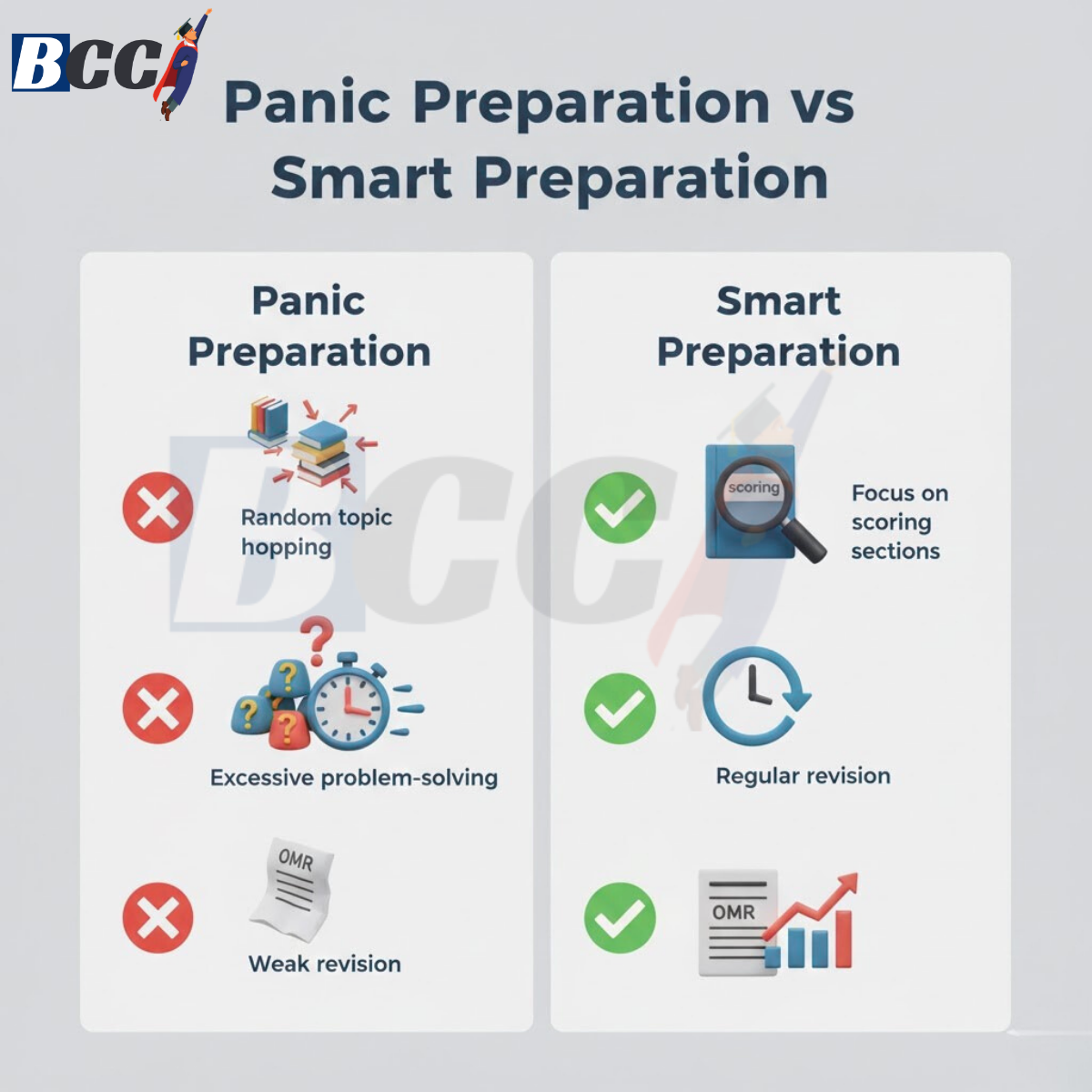
To avoid losing selection by 1–2 marks, aspirants must:
- Maximise attempts in easy and moderate questions
- Strengthen General Science and GA
- Reduce silly mistakes through revision
- Practice time-bound mock analysis
- Focus on exam execution, not just syllabus completion
Smart preparation aligns effort with exam reality, not assumptions.
FAQs
1. Why do 1–2 marks matter more than tough questions in RRB Group D?
Because most candidates score high on easy questions, making selection depend on small differences in marks.
2. Does solving difficult questions help in crossing cut-offs?
Not significantly. Easy and moderate questions attempted accurately have more impact on cut-offs.
3. How can I avoid losing marks in easy questions?
Focus on accuracy, time management, revising General Science/GA, and practising attempt strategy.
4. Does normalisation affect these 1–2 marks?
Yes, normalisation compares performance across shifts, so small differences can become decisive after adjustment.
5. How should I change my preparation to secure those extra marks?
Maximise attempts on easy/moderate questions, avoid silly mistakes, and analyse mocks strategically.
Conclusion: Selection Is Decided by Margins
RRB Group D is a margin-based exam.
It is not the hardest question that decides your result—it is the one easy question you got wrong or skipped.
Understanding this shift helps aspirants move from frustration to strategy. When preparation focuses on minimising small errors and optimising attempts, those missing 1–2 marks today become selected candidates tomorrow.
In RRB Group D, precision beats intensity, and strategy beats struggle.