

Why High Attempts Fail in Easy Papers: Bank, SSC & RRB
After every Bank, SSC, or RRB exam, the same discussion starts among aspirants:
“Paper was easy.”
“I attempted a lot.”
“Still the cut-off is very high.”
Many candidates genuinely believe that high attempts in an easy paper guarantee selection. But when results come, they are shocked to see that even after attempting 80–90% of the paper, they fall below the cut-off.
This article explains why high attempts fail in Bank, SSC, and RRB exams, how easy papers actually make selection tougher, and what aspirants misunderstand about attempt strategy.
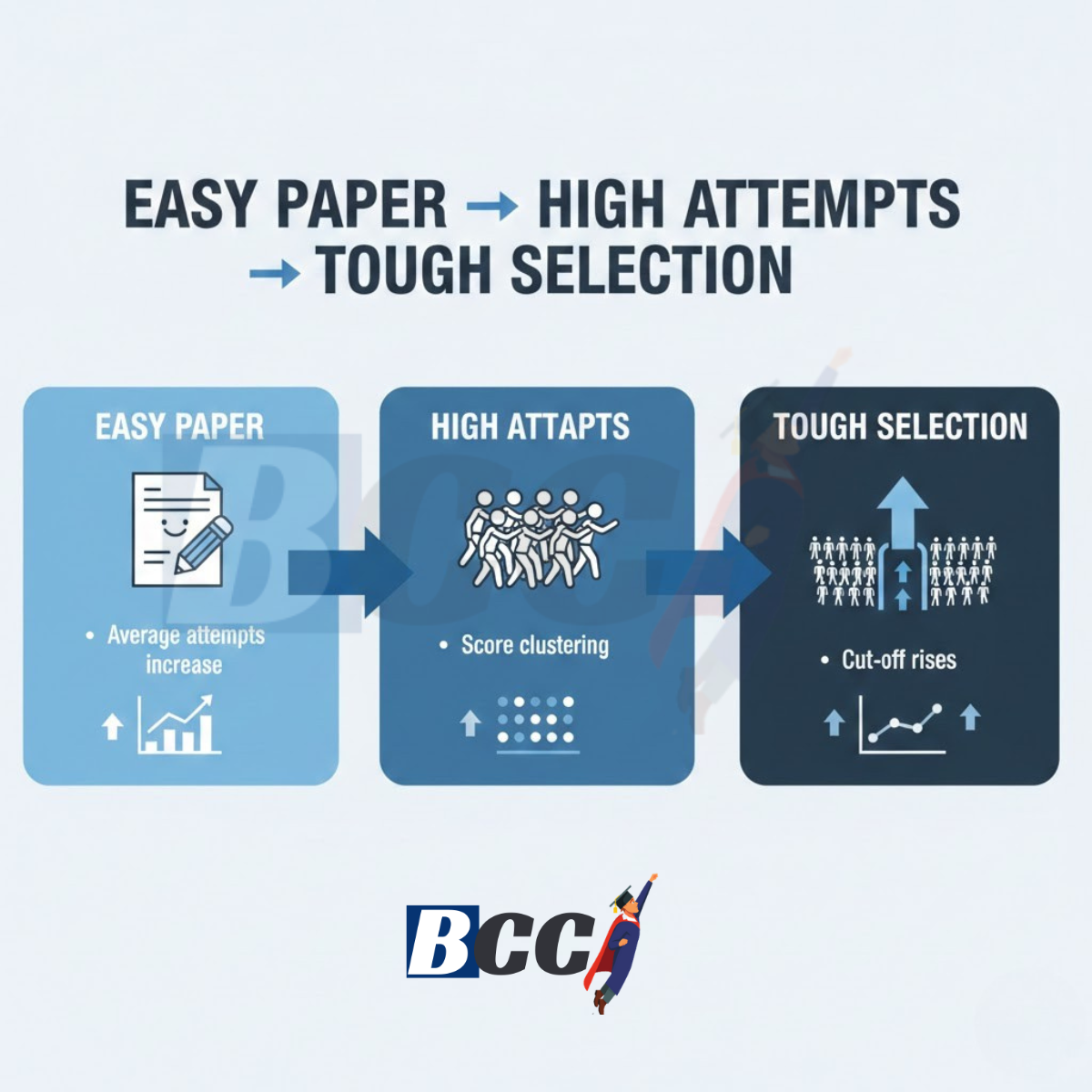
Easy Paper Does Not Mean Easy Selection
This is the biggest misconception.
In competitive exams like:
- IBPS, SBI, RRB (Bank)
- SSC CGL, CHSL, MTS
- RRB NTPC, Group D
An easy paper increases competition, not selection chances.
When the paper is easy:
- More candidates attempt more questions
- Score clustering becomes very tight
- Small mistakes create big rank differences
Selection becomes harder because everyone is scoring well.
High Attempts Increase Competition Density
In tough papers:
- Many candidates skip questions
- Attempts are low
- Accuracy matters more
But in easy or moderate papers:
- Almost all questions look doable
- Average attempts shoot up
- Everyone plays aggressive
Now imagine this situation:
- Thousands of candidates attempt 85–90 questions
- Most get 70–75% accuracy
- Marks difference between candidates is just 1–2 marks
In such cases, high attempts alone do not give advantage.
Why “I Attempted More” Still Fails
Many aspirants say:
“I attempted more than others.”
But the real question is:
Did you attempt better than others?
High attempts fail when:
- Accuracy drops slightly
- Easy questions are missed
- Silly mistakes increase
- One section underperforms
In easy papers, everyone attempts more. What matters is quality within high attempts.
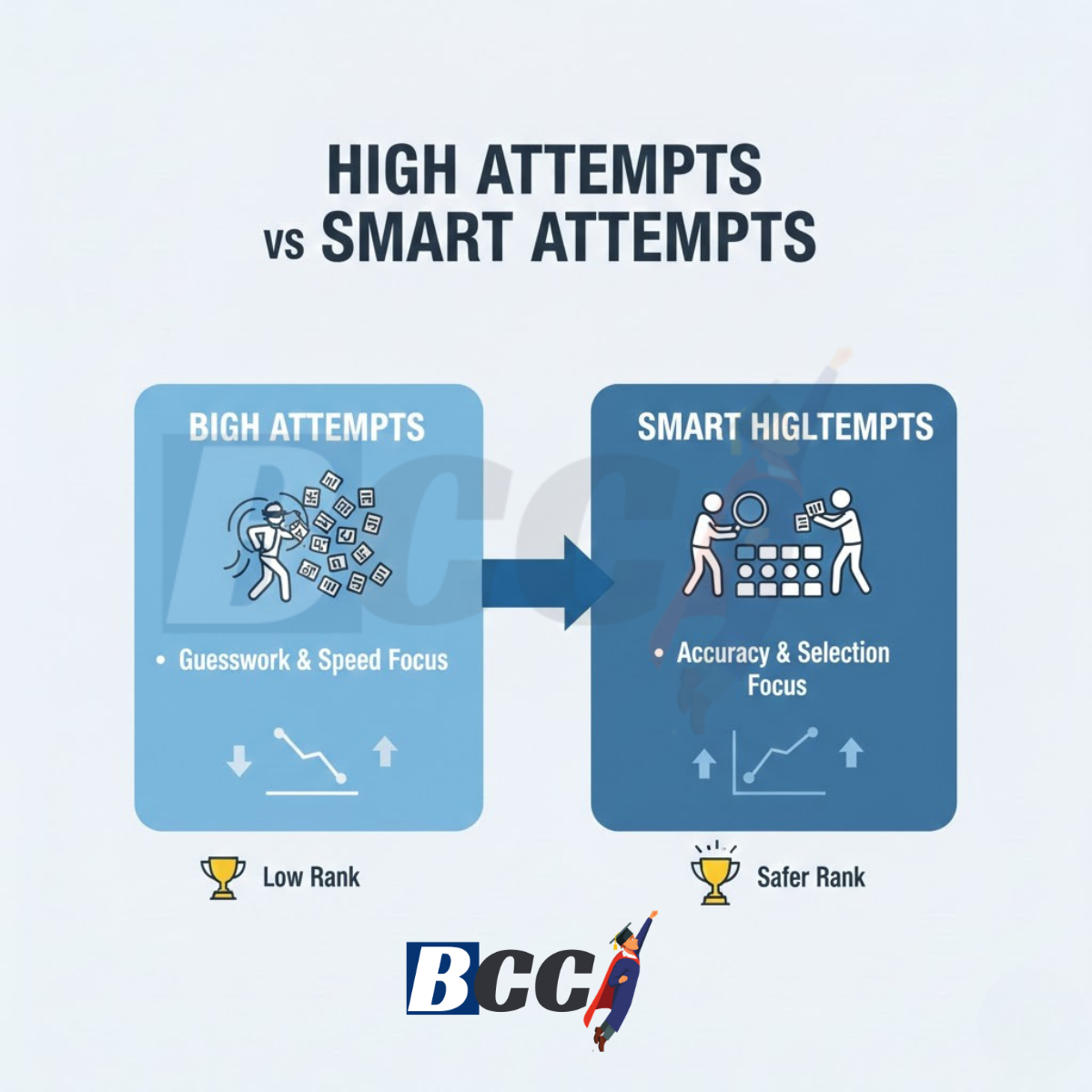
The Accuracy Trap in Easy Papers
Aspirants often think:
“High attempts + decent accuracy = selection”
This logic fails in easy papers.
Why?
- Even average candidates maintain decent accuracy
- Toppers maintain both high attempts and high accuracy
- Mid-level candidates fall in between
If your accuracy is even 3–4% lower than the average, your rank falls sharply.
In easy papers, accuracy becomes a rank-deciding weapon, not a safety net.
Section Imbalance: The Silent Killer
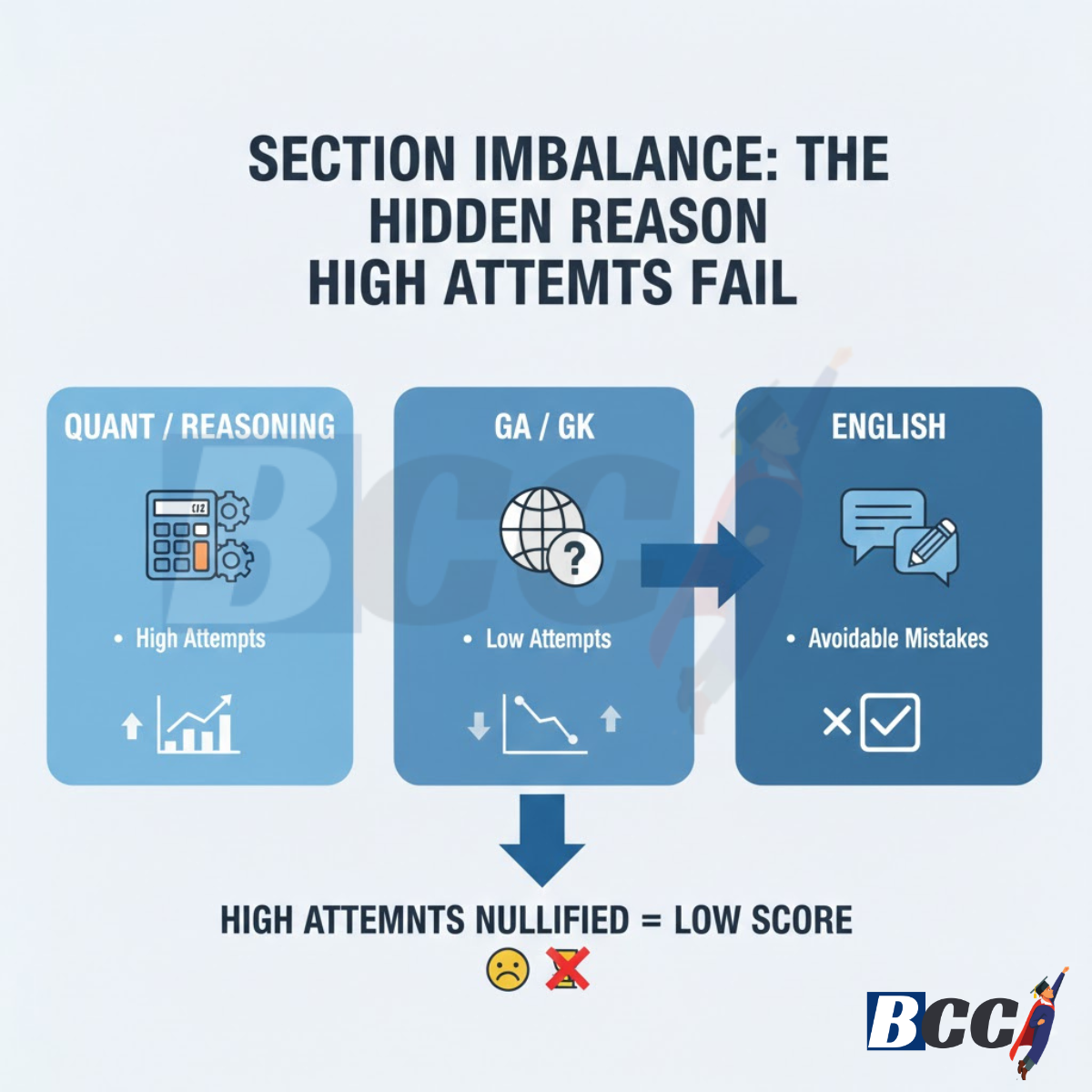
High attempts usually hide one major issue—section imbalance.
Common patterns:
- Very high attempts in Quant/Reasoning
- Poor attempts in GA/GK/English
- One weak section is dragging the overall score
In Bank, SSC, and RRB exams:
- Rank is calculated on total score
- No section is “optional” in practice
Even if you attempt 90 questions, a weak GA or GK section can push you below the cut-off.
General Awareness & GK: The Rank Separator
In most Bank, SSC, and RRB exams:
- GA/GK is ignored by many aspirants
- Questions are factual and quick
- Preparation gap is wide
In easy papers:
- Quant & Reasoning scores cluster
- GA/GK creates rank separation
Candidates with strong GA gain a massive edge, while high-attempt candidates with weak GA lose ground.
Normalisation Makes High Attempts Risky
In exams with multiple shifts (SSC, RRB, Bank):
- Raw marks are not final
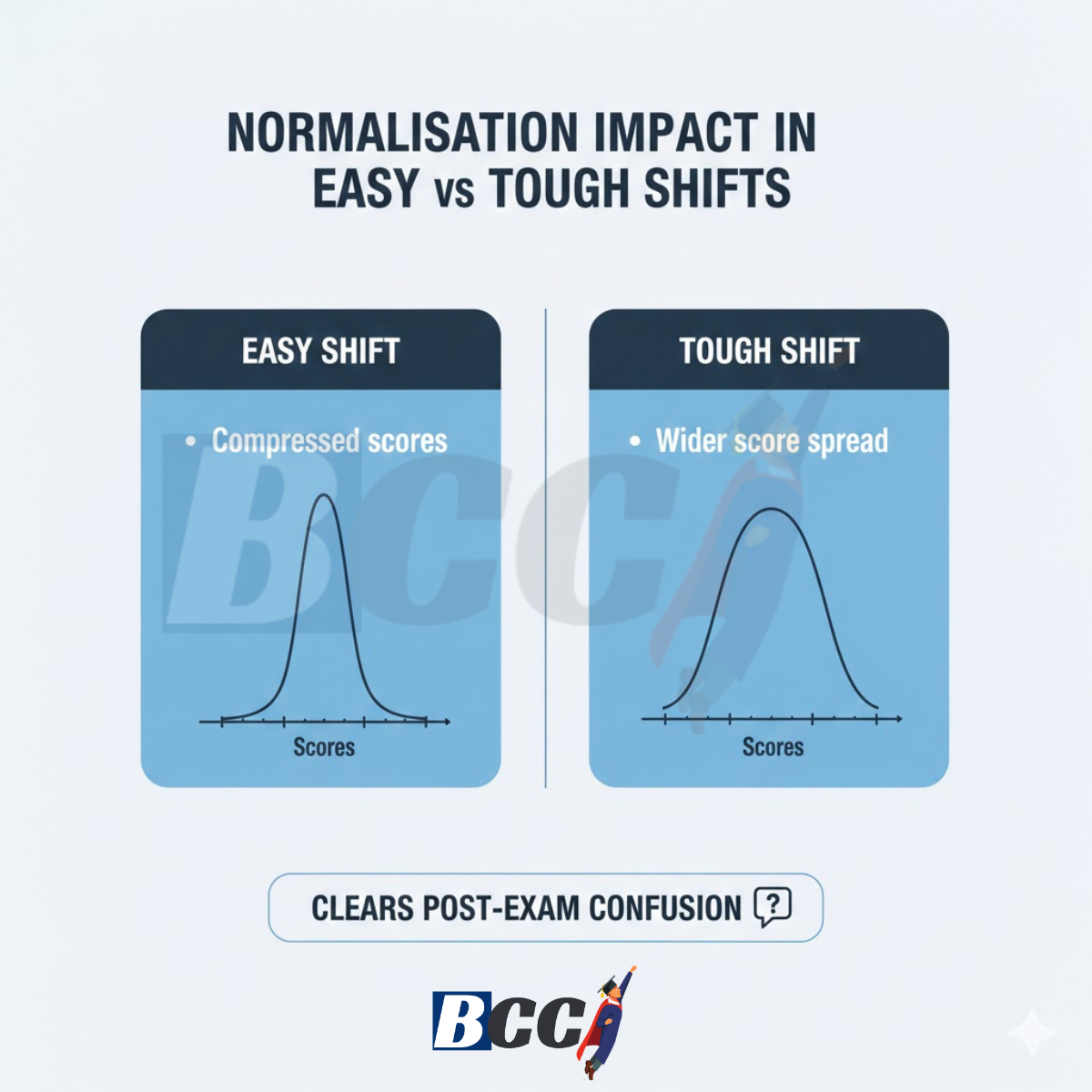
- Normalisation adjusts scores
- Relative performance matters
If your shift is easy:
- Everyone scores high
- Normalisation compresses scores
- Small errors cost more
High attempts with average performance in an easy shift do not translate into safe normalised scores.
Mock Test Illusion vs Real Exam Reality
Mocks create a false sense of security.
In mocks:
- The competition level is lower
- Rank inflation is limited
- High attempts feel rewarding
In the real exam:
- Competition is national-level
- Attempt strategy must be sharper
- Risk management matters more
Many aspirants follow mock-based comfort strategies, not exam-based competitive strategies.
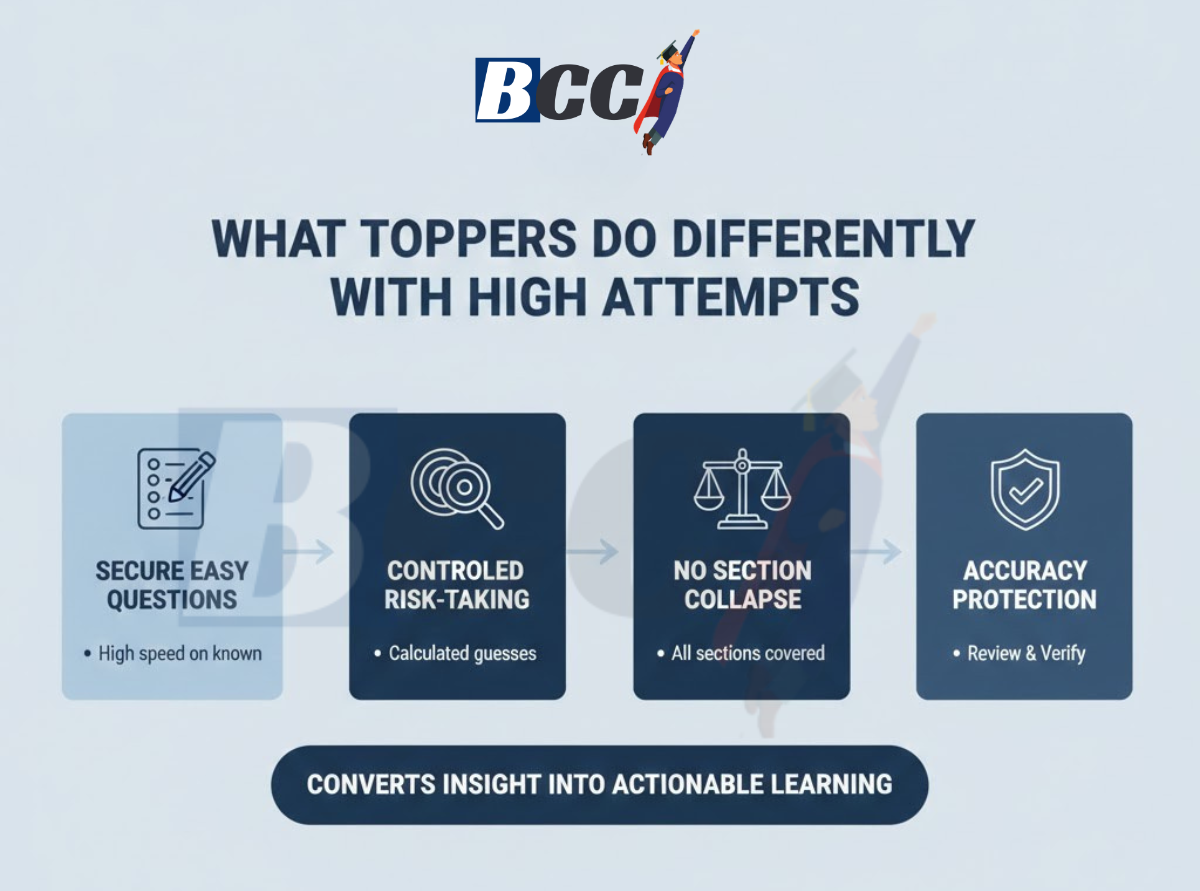
How Toppers Use High Attempts Differently
Top rankers also attempt many questions—but with a difference.
They:
- Secure all easy and moderate questions
- Avoid blind guessing
- Protect accuracy in scoring sections
- Never collapse in GA/GK/English
Their attempts are controlled, not emotional.
Average aspirants:
- Overguess in easy papers
- Panic due to time
- Lose accuracy where others don’t
Bank vs SSC vs RRB: Same Problem, Same Logic
Though exams differ, the pattern is similar:
Bank Exams
- GA + Reasoning decide cut-off
- High attempts fail without GA strength
SSC Exams
- Normalisation + GK decides rank
- Easy shifts punish careless errors
RRB Exams
- High volume of candidates
- 1–2 marks decide the selection
In all three, high attempts without balance fail.
What Aspirants Should Do Instead
To avoid the high-attempt trap:
- Aim for maximum safe attempts, not blind attempts
- Protect accuracy in easy questions
- Strengthen GA/GK consistently
- Avoid section collapse
- Analyse mistakes, not just scores
Your strategy should focus on beating the average candidate, not just attempting more questions.
Conclusion: High Attempts Win Only When Strategy Is Right
High attempts are not wrong.
Blind high attempts are.
In Bank, SSC, and RRB exams:
- Easy papers increase competition
- Rank margins become thinner
- Strategy matters more than effort
Selection does not go to the one who attempts the most,
But to the one who attempts smartly and evenly.
In easy papers, discipline beats aggression.
FAQs – Bank, SSC & RRB Attempt Strategy
1. Why do high attempts fail in Bank, SSC, and RRB exams?
High attempts fail when accuracy drops, easy questions are missed, or one section performs poorly. In easy papers, many candidates attempt a large number of questions, so rank depends on quality, not just quantity.
2. Does an easy paper increase cut-offs in Bank, SSC, and RRB exams?
Yes. Easy papers lead to higher average attempts and tightly clustered scores. This increases competition and pushes cut-offs upward.
3. Is accuracy more important than attempts in easy exams?
Both matter, but in easy papers, accuracy alone is not enough. Aspirants need high but controlled attempts with protected accuracy to stay competitive.
4. Which section causes the most rank damage despite high attempts?
General Awareness or GK usually causes the most damage. Many aspirants ignore it, and even small differences in GA scores create large rank gaps.
5. Does normalisation reduce the benefit of high attempts?
Yes. In multi-shift exams, normalisation compresses scores in easier shifts. High attempts without strong relative performance do not convert into safe final scores.
6. Are mock test attempts reliable indicators of real exam performance?
Not completely. Mock tests have lower competition levels. Real exams demand sharper attempt control and better section balance.
7. How should aspirants improve their attempt strategy for selection?
Aspirants should focus on securing all easy questions, maintaining balance across sections, strengthening GA/GK, and analysing mistakes rather than chasing maximum attempts.
8. Is this attempt strategy logic the same for Bank, SSC, and RRB exams?
Yes. While exam patterns differ, the core logic—easy paper, high competition, narrow rank margins—remains the same across all three.