

Why January Preparation Decides Bank, SSC & RRB Final Selection
Introduction: January Is Not Just Another Month
For most Bank, SSC, and RRB aspirants, January feels like a normal preparation month. Many believe the real pressure will come later, closer to the exam. This thinking is one of the biggest reasons why capable students miss selection.
In reality, January preparation quietly decides who will cross the cut-off and who will fall short by 1–2 marks. This month sets your accuracy level, attempt strategy, section balance, and revision discipline. Aspirants who misuse January usually end up panicking in the final weeks.
This article explains why January is a deciding month, what most students do wrong, and how to use this phase smartly instead of emotionally.

1. January Sets the Base for Cut-Off Level Preparation
By January, most aspirants have already:
- Finished the basic syllabus once
- Practiced some mock tests
- Identified weak and strong areas
What separates selected candidates is not learning new topics, but stabilising their score near the cut-off level.
Cut-offs in Bank, SSC, and RRB exams are usually missed by:
- 0.5 marks
- 1 mark
- 2 marks
These marks are not gained in the last week. They are gained through January-level refinement:
- Fewer silly mistakes
- Better question selection
- Stronger scoring sections
January is where serious aspirants start behaving like exam-takers, not learners.
2. Easy Papers Punish Poor January Preparation
In recent years, many Bank, SSC, and RRB papers have been labelled “easy”. But easy papers create a different problem.
Easy paper means:
- High average attempts
- Very small margin between candidates
- One weak section can destroy a rank
Students who delay strategy work until February or March struggle because:
- Their attempt strategy is unclear
- Accuracy collapses under speed pressure
- Weak sections remain weak
January preparation ensures that easy paper does not become a trap.
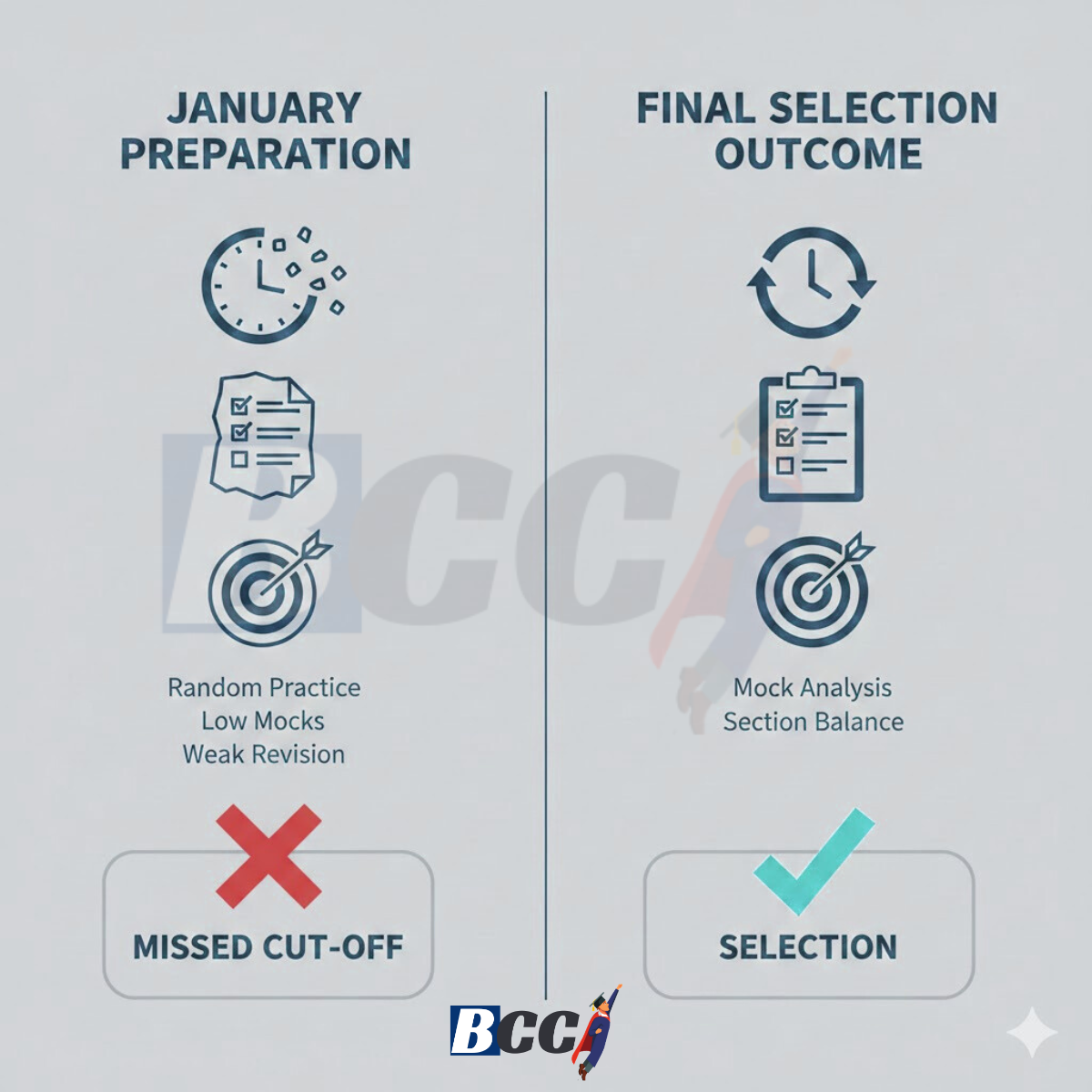
3. January Is the Month of Strategy, Not Syllabus
One common mistake aspirants make is treating January like the first month of preparation.
In January:
- New topics give low returns
- Over-studying creates confusion
- Random question-solving increases mistakes
Instead, January should focus on:
- Deciding how many questions to attempt
- Identifying which questions to skip
- Fixing section-wise time limits
- Reducing negative marking
This is why toppers often say:
“My score improved after I stopped studying more.”
That decision usually happens in January.
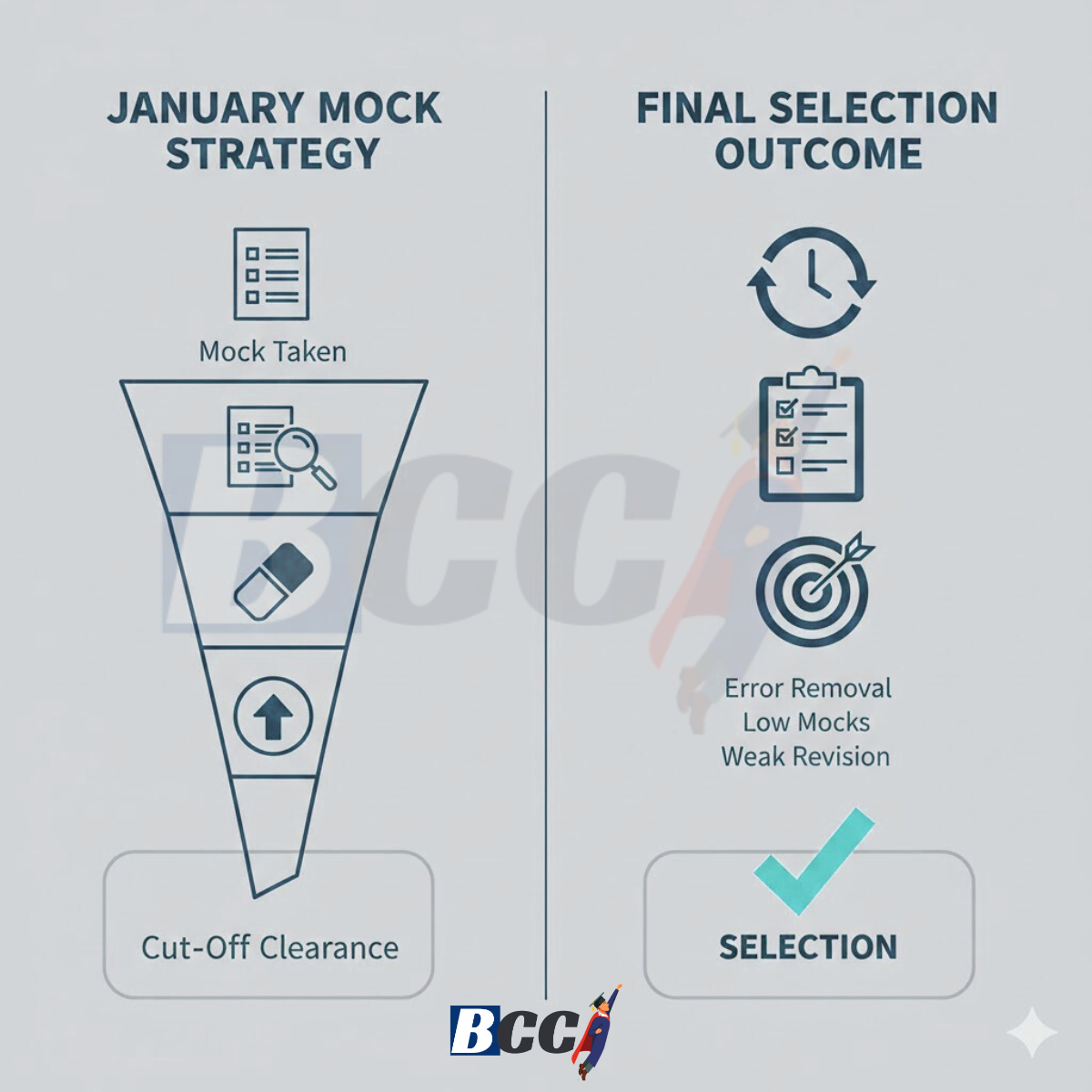
4. Mock Tests Matter More in January Than Any Other Month
Mocks taken in January are different from mocks taken earlier.
In January, mocks help you:
- Understand score stability
- Identify repeated mistakes
- Improve decision-making under time pressure
Many aspirants chase mock marks instead of mock learning. Selected candidates do the opposite.
They analyse:
- Which 5 questions should not have touched
- Which easy questions did they miss
- Which section pulled their score down
Mock analysis in January directly improves final exam performance.
5. January Fixes Sectional Weakness Before It Becomes Fatal
In Bank, SSC, and RRB exams, one weak section is enough to ruin selection, even if the overall score looks decent.
January is the last safe window to:
- Improve speed in a slow section
- Increase attempts in a scoring section
- Reduce fear of a problematic area
After January:
- Changes take more effort
- Pressure increases
- Confidence becomes fragile
Students who ignore weak sections in January usually depend on luck later. Luck does not have clear-cut-offs.
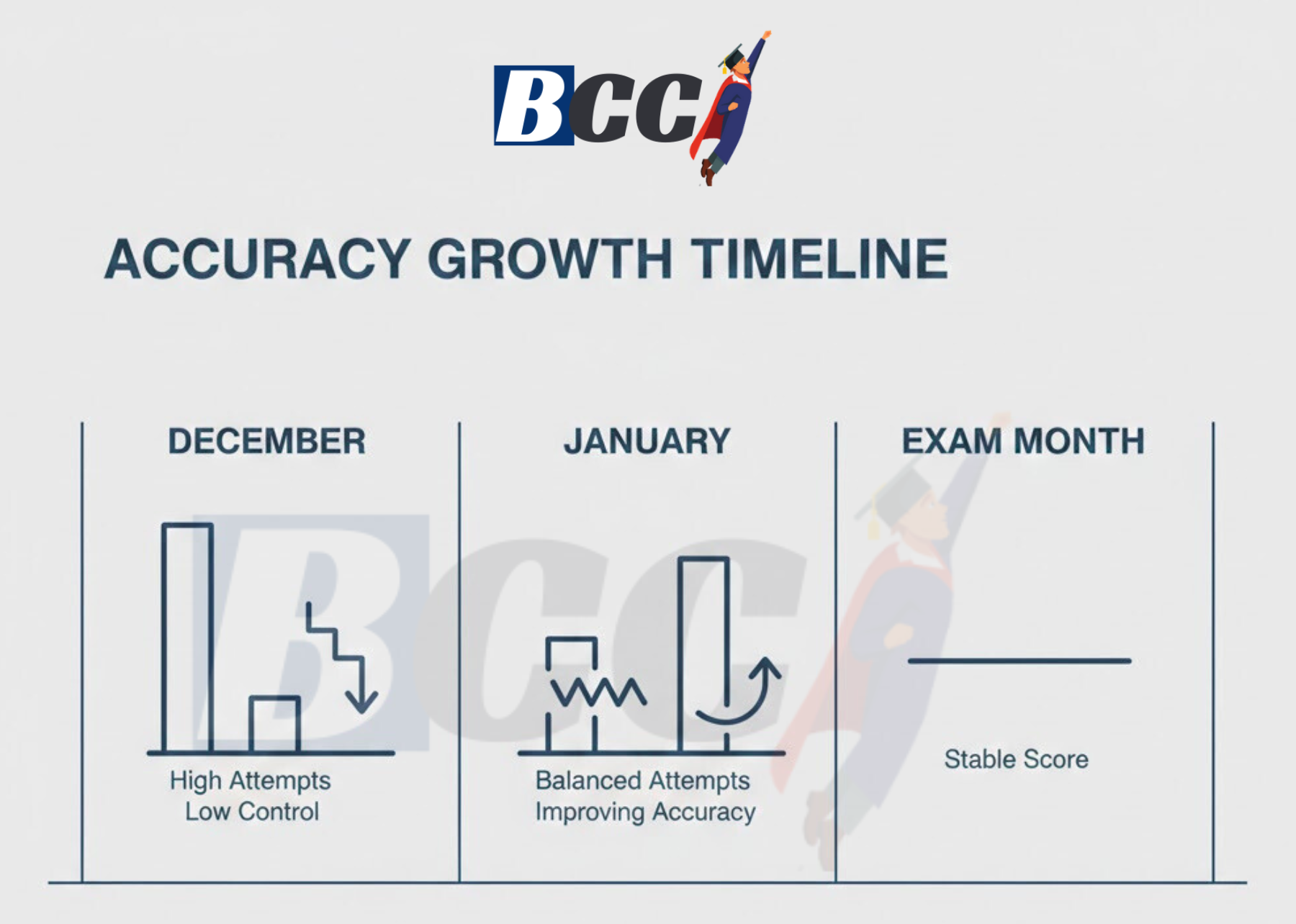
6. Accuracy Improvement Is a January Job
Accuracy does not improve by solving thousands of questions randomly.
It improves when:
- You understand why you made mistakes
- You identify question types that trap you
- You stop guessing under pressure
January gives enough time to:
- Experiment with attempt strategies
- Adjust risk-taking
- Learn when not to attempt
This controlled environment disappears in the final month.
7. Panic Preparation Starts After January
Students who misuse January often:
- Start over-solving in February
- Jump between sources
- Increase study hours without direction
This creates mental fatigue and confusion.
Students who prepare well in January:
- Revise instead of rushing
- Trust their strategy
- Focus on execution, not experimentation
This mental calm is a hidden advantage in competitive exams.
8. What Aspirants Should Do in January (Action Points)
Practical steps for January:
- Take 2–3 mocks per week
- Analyse every mock deeply
- Fix the attempt range for each section
- Strengthen scoring areas
- Limit new topics
- Revise frequently tested concepts
- Track mistakes in a notebook
This is not aggressive preparation. This is intelligent preparation.
Conclusion: January Builds the Selection Margin
Bank, SSC, and RRB selections are rarely decided by intelligence or hard work alone. They are decided by:
- Strategy clarity
- Error control
- Section balance
- Mental discipline
All these are built in January.
Students who respect January usually respect the cut-off. Those who ignore it often spend the next year repeating the same exam.
Selection is not decided on exam day.
It is quietly decided in January.
FAQs: January Preparation for Bank, SSC & RRB Exams
1. Why is January so important for Bank, SSC, and RRB preparation?
January is the month when aspirants move from syllabus completion to exam-level strategy. This is when accuracy, attempt selection, and mock analysis start shaping final scores. Small improvements made in January often decide selection margins.
2. Should I focus on new topics or revision in January?
January should be mainly about revision and strengthening existing topics. New topics give low returns at this stage and often increase confusion. Refining what you already know is more effective for cut-off clearance.
3. How many mock tests should I take in January?
Taking 2–3 full-length mocks per week is ideal. More important than the number of mocks is detailed analysis to identify repeated mistakes and weak sections.
4. Can January preparation help in easy papers with high cut-offs?
Yes. Easy papers punish poor strategy. January preparation helps aspirants fix attempt range, improve accuracy, and avoid negative marking, which is crucial when cut-offs are high.
5. What is the biggest mistake aspirants make in January?
The biggest mistake is treating January casually and delaying strategy work. Many aspirants continue random practice without analysing mocks, which leads to panic and unstable scores later.
6. Is January preparation useful for repeat aspirants?
Very much. Repeat aspirants often miss cut-offs by small margins. January is the best time for them to correct past mistakes, improve weak sections, and stabilise their scores.