

RRB Exam Selection Strategy: How to Clear CBT-1 with High Accuracy
Focus: Cutoff Awareness, Attempt Strategy, Smart Question Selection
Exam Relevance: RRB NTPC, Group D, ALP, Technician (CBT-1)
Introduction: Why CBT-1 Is an Accuracy Game
RRB CBT-1 is not about attempting the maximum number of questions. It is about attempting the right questions with high accuracy.
Every year, many aspirants fail despite good preparation because:
- They attempt too many risky questions
- They ignore cutoff trends
- They lack a clear question selection strategy
Since negative marking exists, one wrong decision can cancel out multiple correct answers. This article explains how to clear CBT-1 by maximising accuracy, understanding cutoffs, and making smart choices inside the exam hall.

Understanding RRB CBT-1 Exam Structure
RRB CBT-1 is a screening test, but the competition level is extremely high.
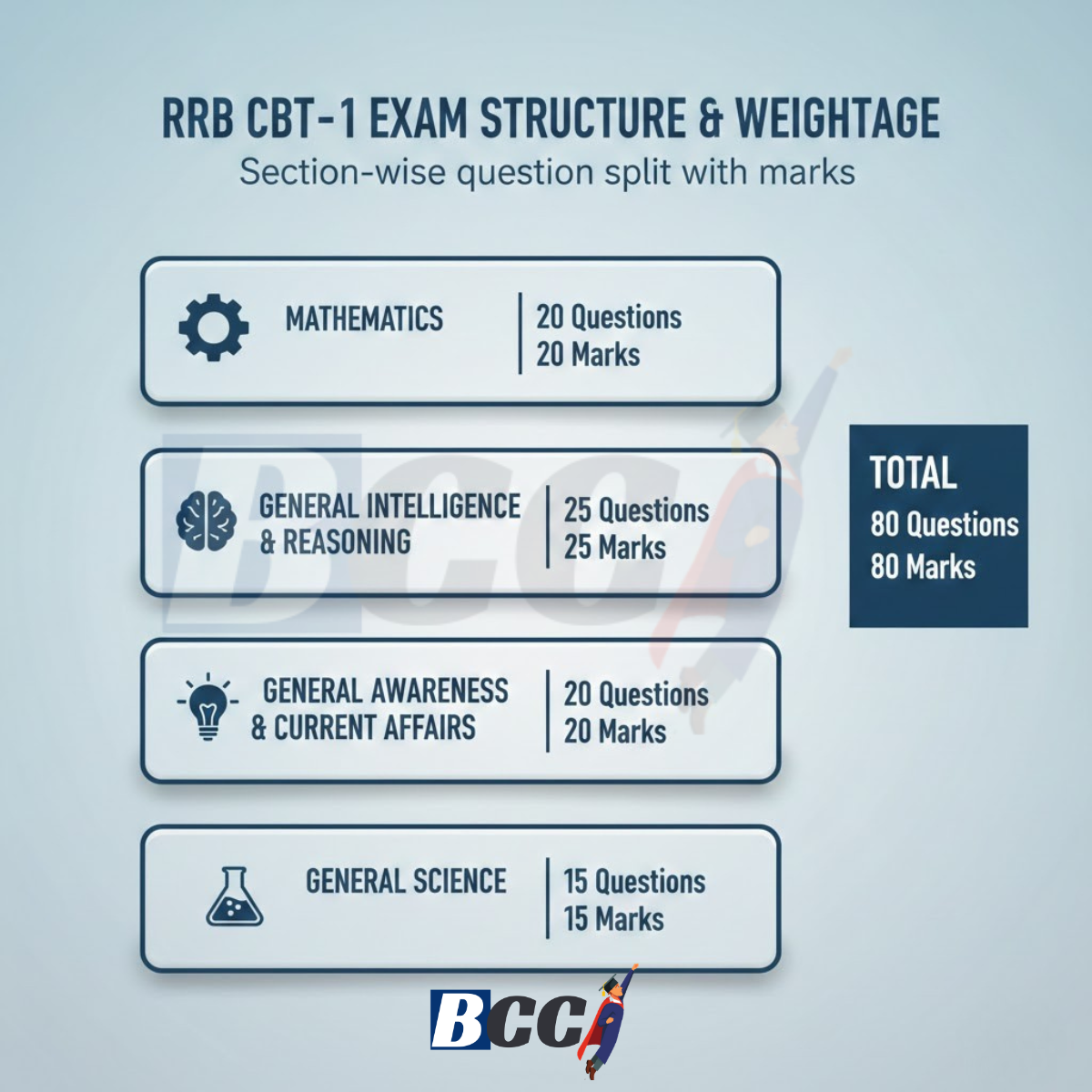
Typical CBT-1 Pattern
| Section | Questions | Marks |
|---|---|---|
| Mathematics | 30 | 30 |
| Reasoning | 30 | 30 |
| General Awareness | 40 | 40 |
| Total | 100 | 100 |
- Time: 90 minutes
- Negative marking: ⅓ mark per wrong answer
- Goal: Score safely above the cutoff
Cutoff Awareness: The First Step to Selection
RRB cutoffs vary based on:
- Exam post (NTPC / Group D / ALP)
- Category
- Shift difficulty
- Number of vacancies
Key Insight
You do not need 100 marks to qualify. You need a “safe score”.
General Cutoff Trends (Approximate)
| Exam | Safe Score Range |
|---|---|
| RRB NTPC | 65–75 |
| RRB Group D | 60–70 |
| RRB ALP | 65–75 |
Your strategy should aim to cross the cutoff with a buffer, not chase full marks.
High-Accuracy Attempt Strategy for CBT-1
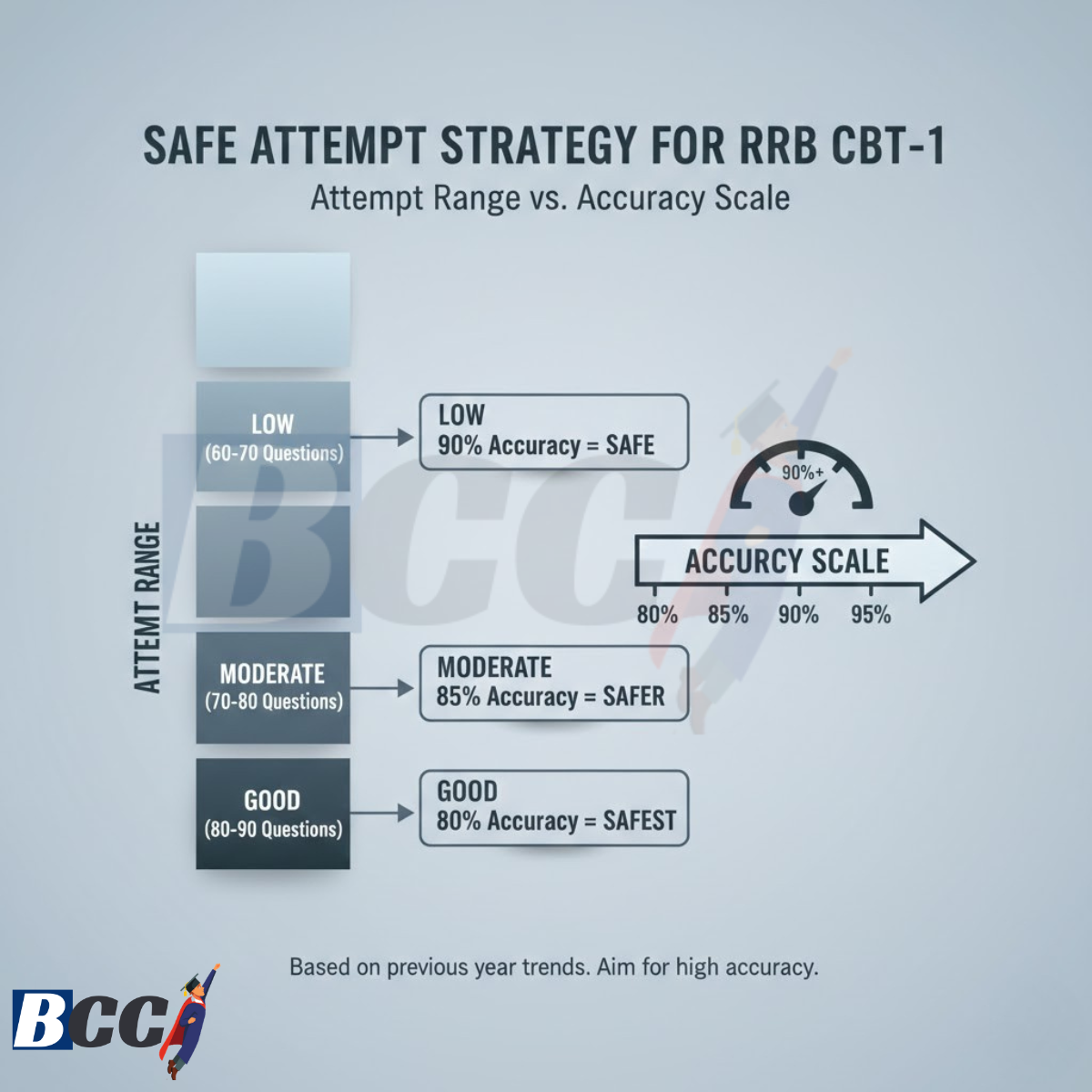
Ideal Attempt Range (With Accuracy)
| Section | Safe Attempts |
|---|---|
| Mathematics | 18–22 |
| Reasoning | 20–24 |
| General Awareness | 22–28 |
Golden Rule:
Attempt only those questions where you are 70–80% sure.
Smart Question Selection Strategy
RRB papers always have a mix of easy, moderate, and tricky questions.
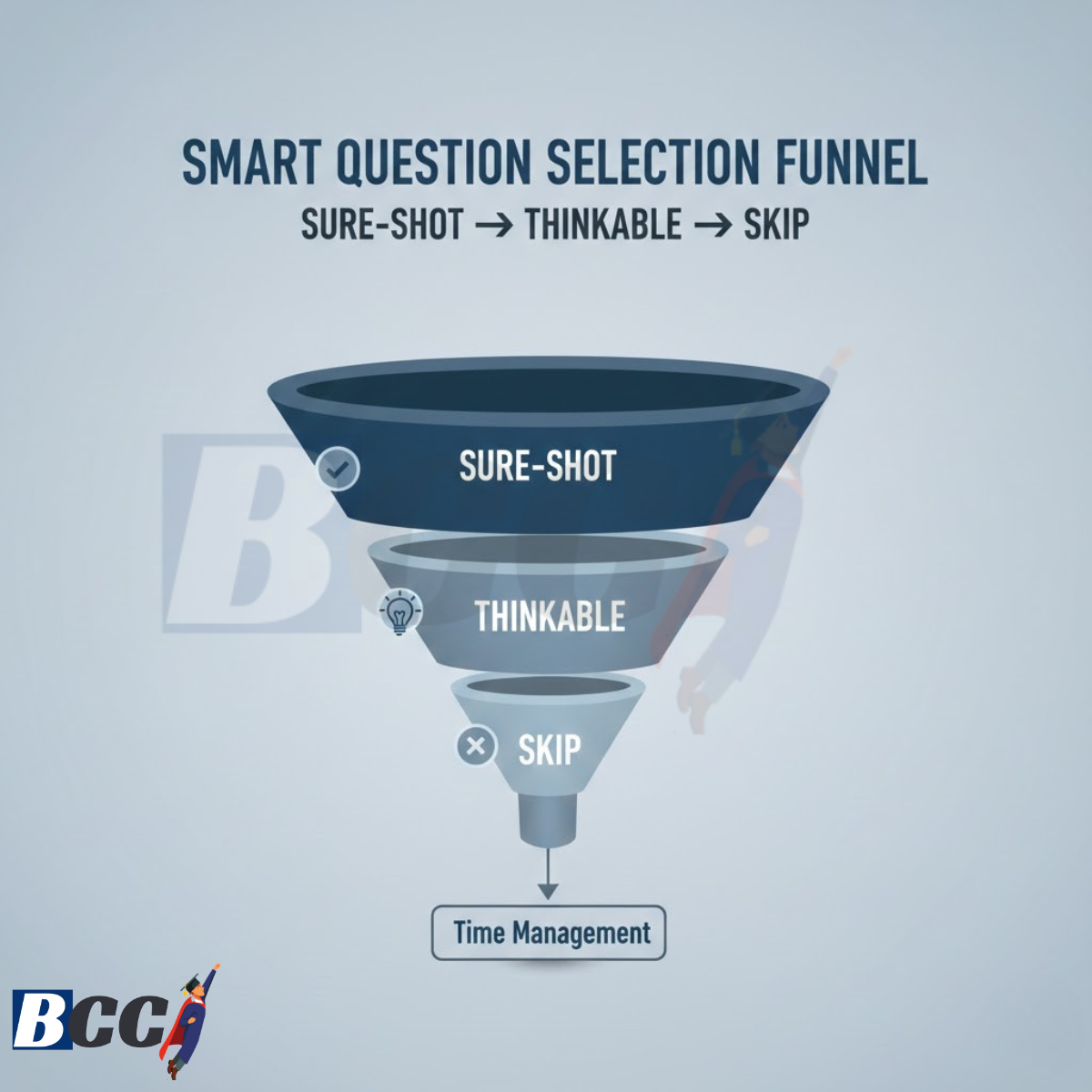
3-Level Question Classification
-
Sure-Shot Questions
-
Direct
-
Formula or fact-based
-
Attempt immediately
-
-
Thinkable Questions
-
Need short calculation
-
Attempt only if time permits
-
-
Risky Questions
-
Lengthy
-
Conceptually confusing
-
Best left unattempted
-
Question Selection Formula
Sure-Shot first → Thinkable later → Skip risky
This approach alone can improve your score by 10–15 marks.
Section-Wise Accuracy Strategy
Mathematics
- Focus on Arithmetic first
- Skip lengthy DI & geometry
- Avoid speed-based traps
Reasoning
- Attempt series, analogy, syllogism first
- Be cautious with puzzles
General Awareness
- Fastest section
- Answer directly or skip
- Do not guess blindly
Time Management Strategy Inside Exam Hall
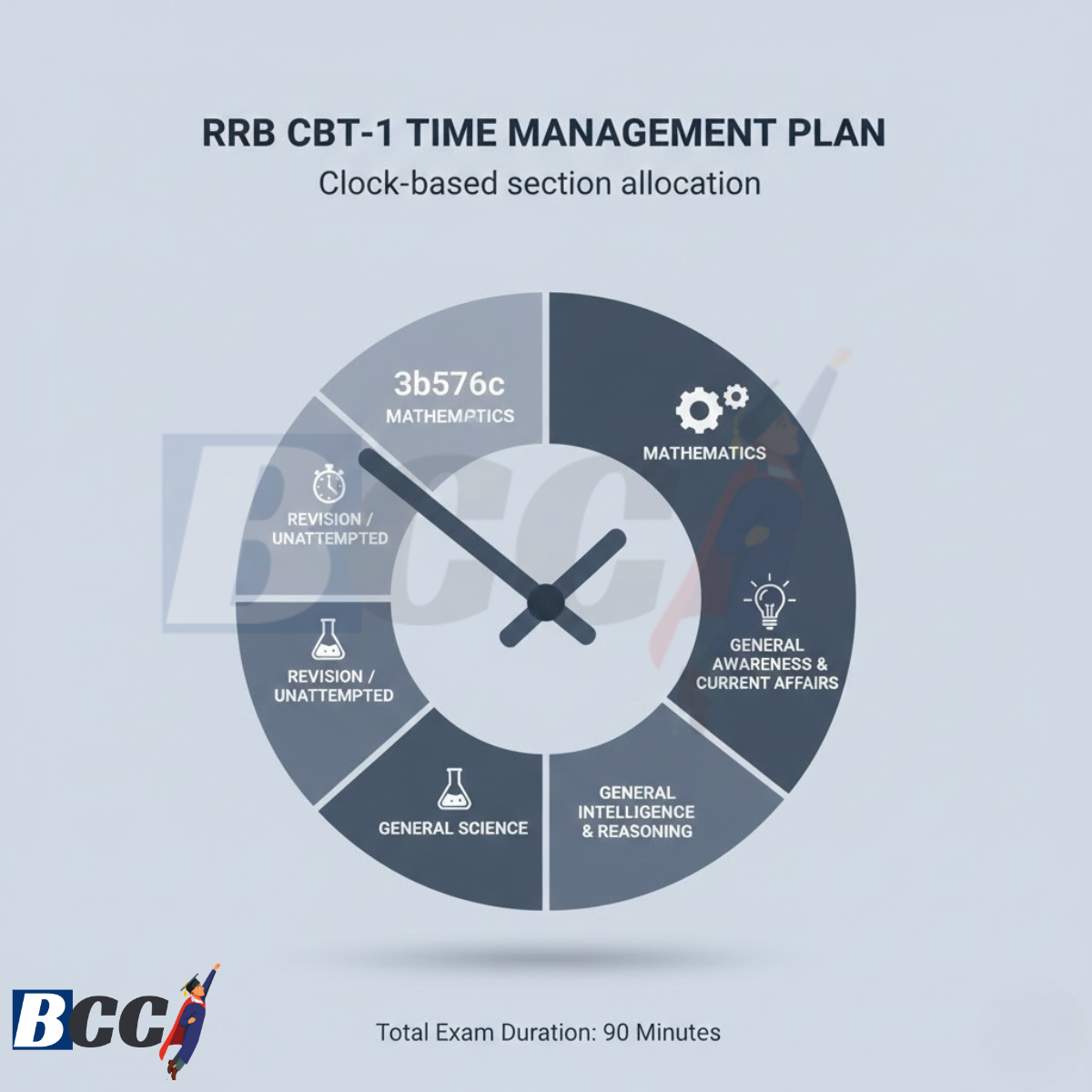
Ideal Time Allocation
| Section | Time |
|---|---|
| GA | 15–20 min |
| Reasoning | 25–30 min |
| Maths | 30–35 min |
| Buffer | 5–10 min |
Finish GA first to build confidence and save time.
Mock Test Strategy That Improves Accuracy
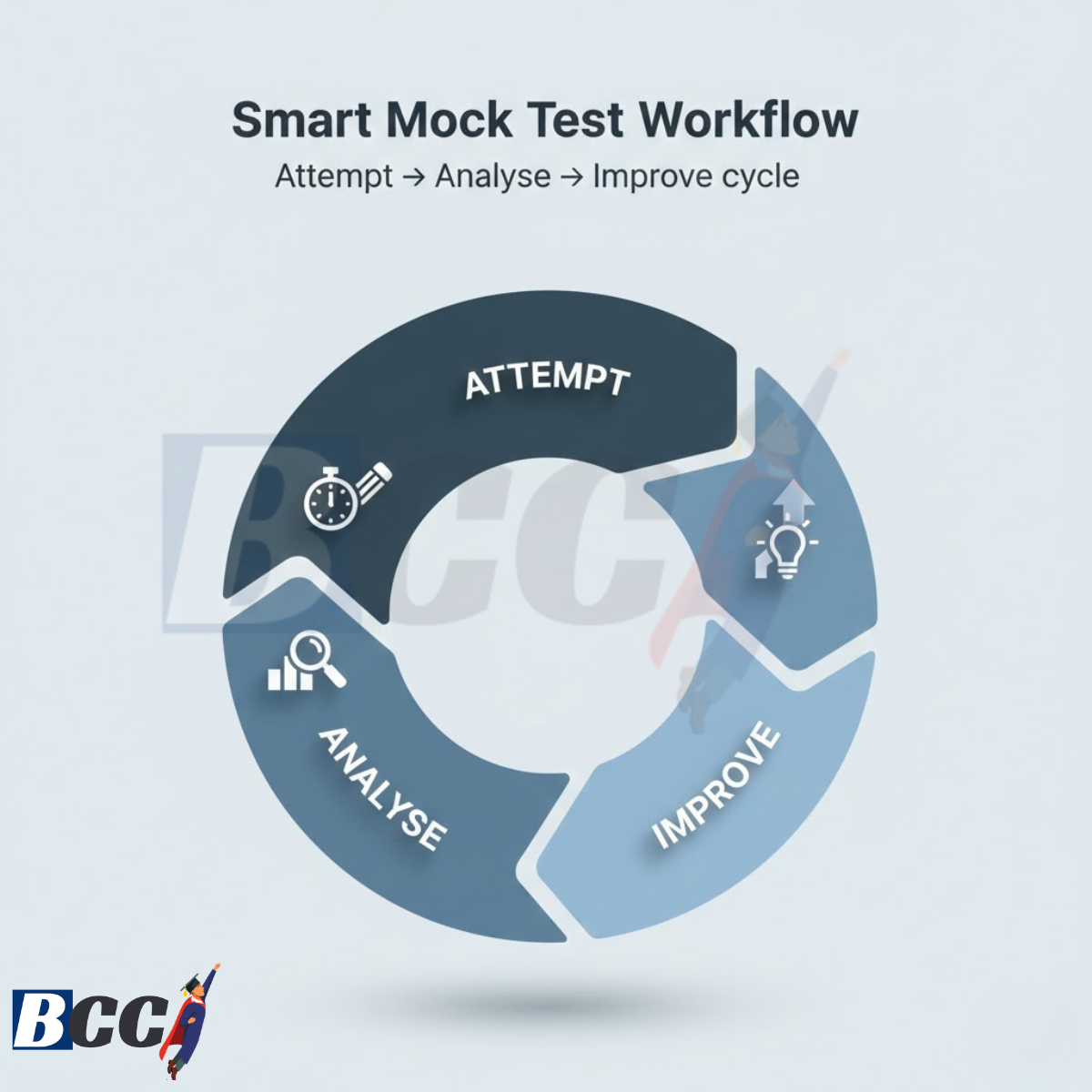
Mock tests are not for counting attempts — they are for error elimination.
Smart Mock Workflow
- Attempt the mock seriously
- Analyse wrong + skipped questions
- Identify weak topics
- Revise & re-attempt
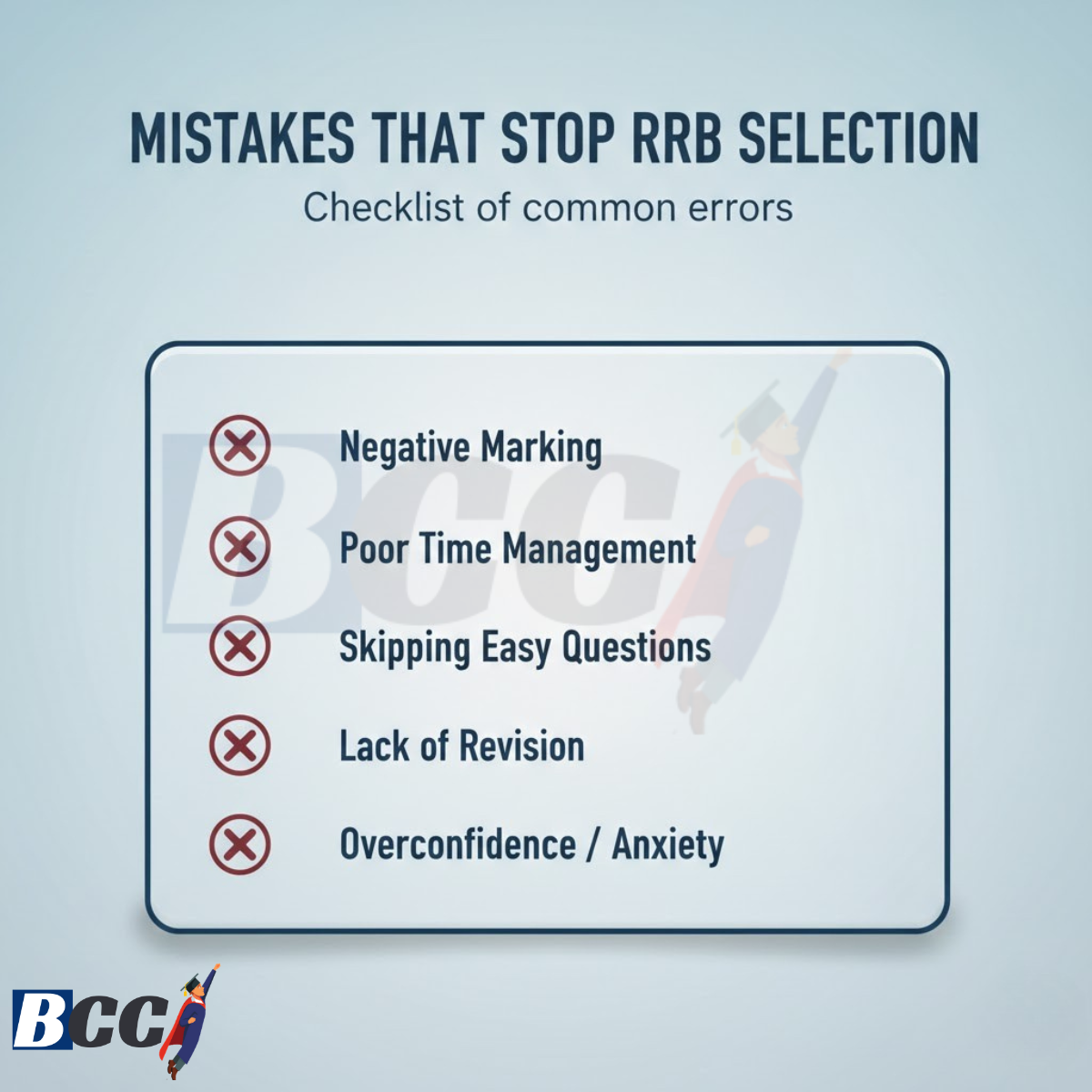
Common Mistakes That Reduce CBT-1 Scores
- Attempting all questions
- Ignoring GA revision
- Overconfidence in Maths
- Blind guessing
- No cutoff awareness
Final 15-Day Accuracy Boost Plan
- Revise the GA short notes daily
- Solve PYQs section-wise
- Attempt 1 mock every 2 days
- Focus on accuracy > attempts
Conclusion: Accuracy Is the Real Selection Strategy
RRB CBT-1 is not about being the fastest. It is about being calm, selective, and accurate.
By:
- Understanding cutoffs
- Attempting wisely
- Selecting the right questions
- Avoiding unnecessary risks
You can confidently clear CBT-1 and move one step closer to final selection.
FAQs – RRB CBT-1 Selection Strategy
Q1. How many questions should I attempt in RRB CBT-1 to clear the cutoff?
There is no fixed number. A safe attempt range is 60–70 questions with high accuracy. Attempting fewer questions with accuracy is better than attempting many with guesses.
Q2. Is accuracy more important than speed in RRB CBT-1?
Yes. Due to negative marking, accuracy plays a bigger role than speed. One wrong answer can cancel out multiple correct attempts.
Q3. Which section should be attempted first in CBT-1?
Most toppers attempt General Awareness first because it is quick, direct, and boosts confidence early in the exam.
Q4. How important is cutoff awareness for RRB exams?
Very important. Knowing expected cutoffs helps in planning a realistic attempt strategy and avoids unnecessary risks.
Q5. Are mock tests necessary for improving accuracy?
Yes. Mock tests help identify weak areas, improve time management, and reduce repeated mistakes, which directly improves accuracy.