

Last 30 Days Revision Plan for SSC and RRB: What to Study and What to Skip
The last 30 days before SSC and RRB exams are not meant for learning new things randomly. They are meant for revision, accuracy building, and mock-based improvement. Many aspirants work hard for months but lose marks in the final month because they:
- start new books
- over-attempt mocks without analysis
- revise without structure
- waste time on low-value topics
SSC (CGL/CHSL/GD) and RRB (NTPC/Group D/ALP/Technician) exams are high competition exams, and selection depends more on:
-
smart revision
-
high accuracy
-
fast recall
-
strong mock strategy
This article provides a clear 30-day revision plan, along with what to study and what to skip in the final month.

Why the Last 30 Days Are the Most Important Phase
The last month decides:
- whether you can recall formulas instantly
- whether you avoid silly mistakes
- whether your speed improves
- whether your weak areas get fixed
In SSC and RRB exams, most questions are:
- repeated patterns
- basic-to-moderate difficulty
- time-bound
So, revision and PYQ-based practice in the final month give maximum return.
Golden Rule for the Last 30 Days
Do not increase your syllabus. Increase your score.
This is the core mindset needed.
Your aim is not to “cover everything”. Your aim is to:
- attempt maximum sure questions
- avoid negative marking
- manage time properly
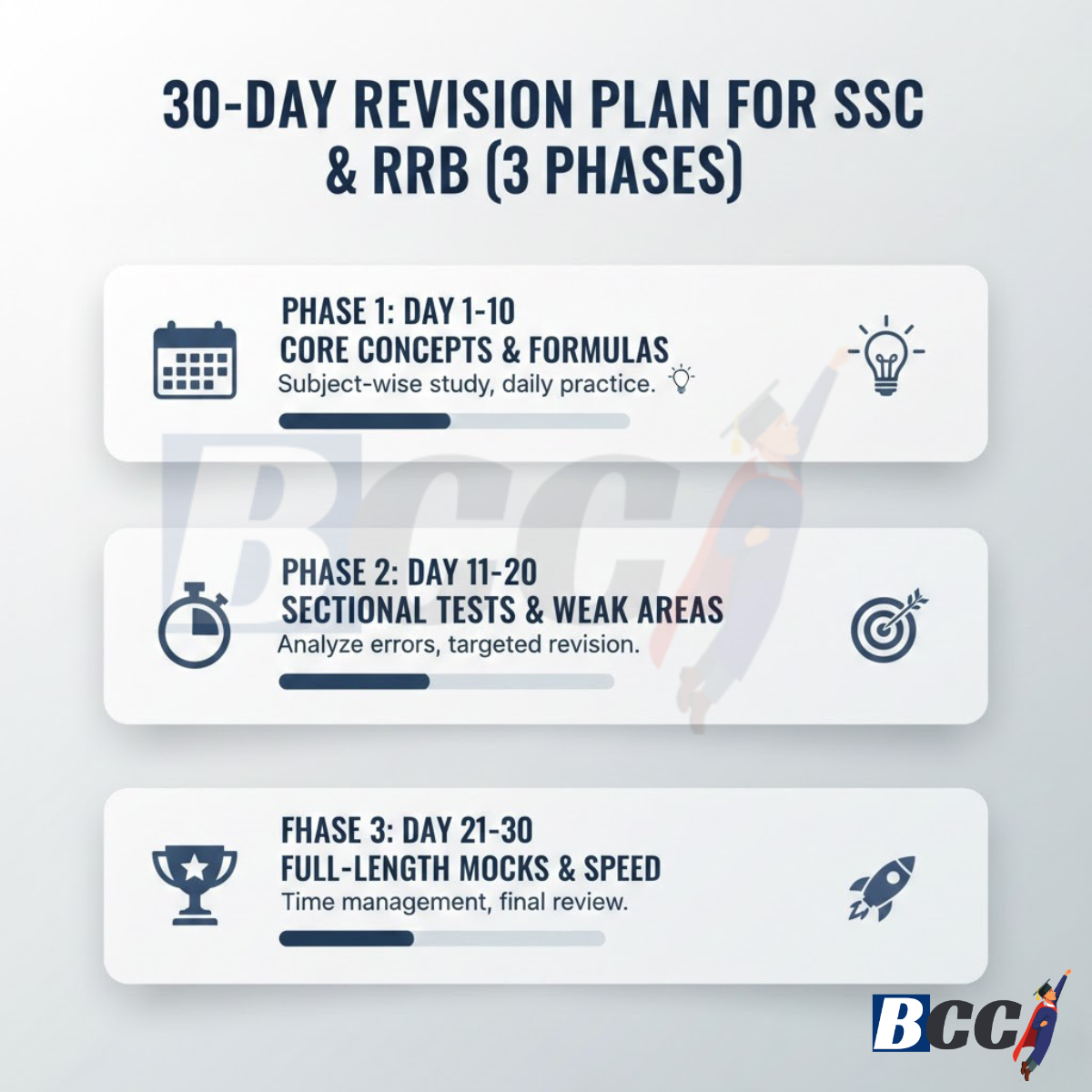
The Best 30-Day Strategy: Divide into 3 Phases
Instead of studying randomly, divide the last 30 days into 3 clear phases.
Phase 1: Days 1–10 (Revision + PYQ Strengthening)
Goal: Refresh all high-scoring topics and build confidence.
Phase 2: Days 11–20 (Mock Practice + Weak Area Fixing)
Goal: Improve score through tests and analysis.
Phase 3: Days 21–30 (Final Revision + Speed + Accuracy)
Goal: Fast recall, error-free attempts, exam temperament.
What to Study in the Last 30 Days (High Priority Areas)
SSC and RRB both test similar core areas:
- Quantitative Aptitude
- Reasoning
- English
- General Awareness / General Science
But the weightage differs slightly. So the best plan is to prepare common high-scoring topics first.
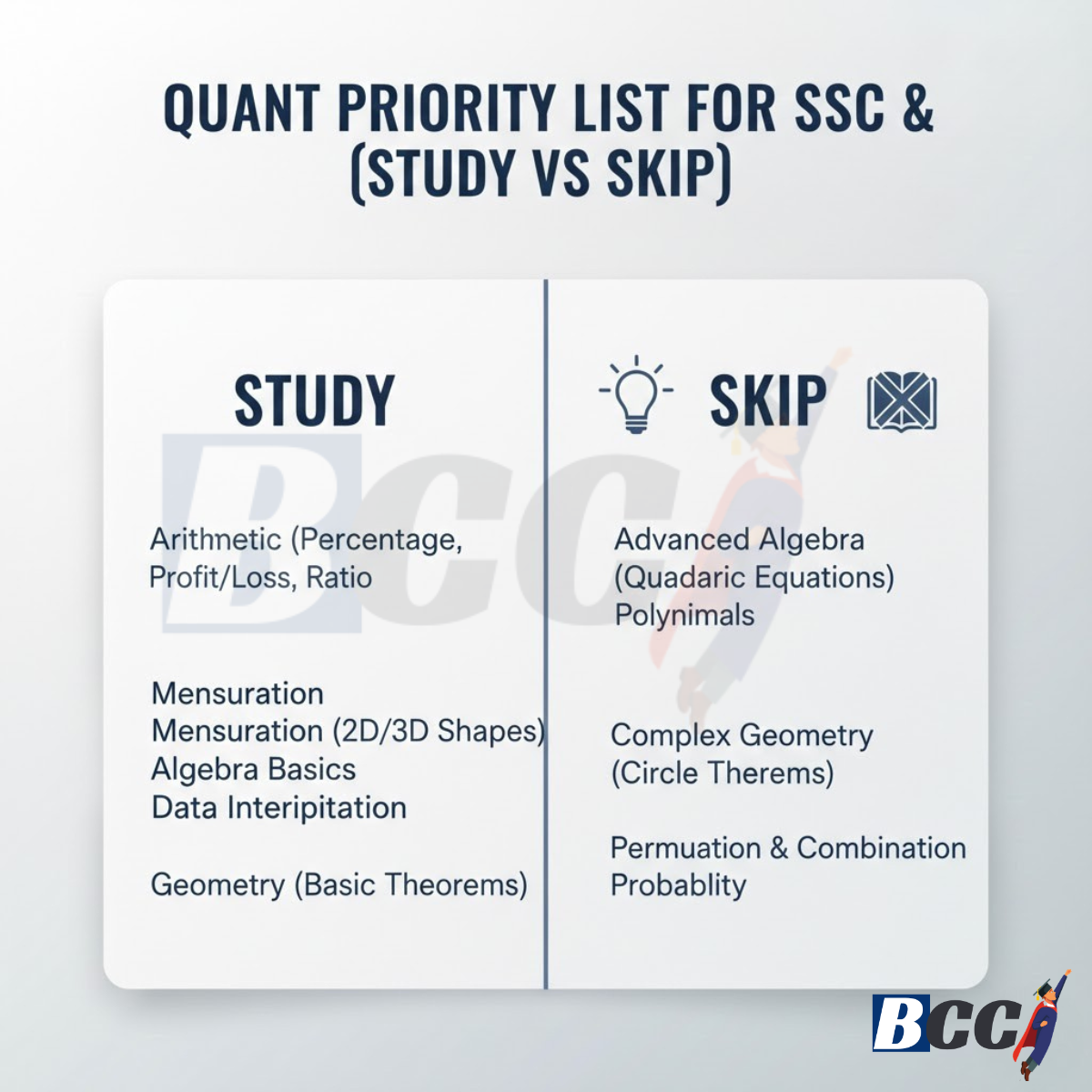
Quant: What to Study and What to Skip
What to Study (High-Scoring and Repeatable)
Focus on these first:
Arithmetic (Most Important)
- Percentage
- Profit & Loss
- Simple Interest & Compound Interest
- Ratio & Proportion
- Time & Work
- Time, Speed & Distance
- Mixture & Alligation
- Average
Algebra (Selective)
- Linear equations
- Basic identities
- Simplification
Geometry & Mensuration (Important)
- Triangle, circle basics
- Area and perimeter
- Cylinder, cone, sphere (formulas)
Data Interpretation (Basic)
- Table DI
- Bar graph DI
What to Skip (In Last 30 Days)
- New advanced geometry theorems
- Complex algebra topics
- Very lengthy DI sets
- New shortcut tricks that confuse you
In the final month, stability matters more than new methods.
Reasoning: What to Study and What to Skip
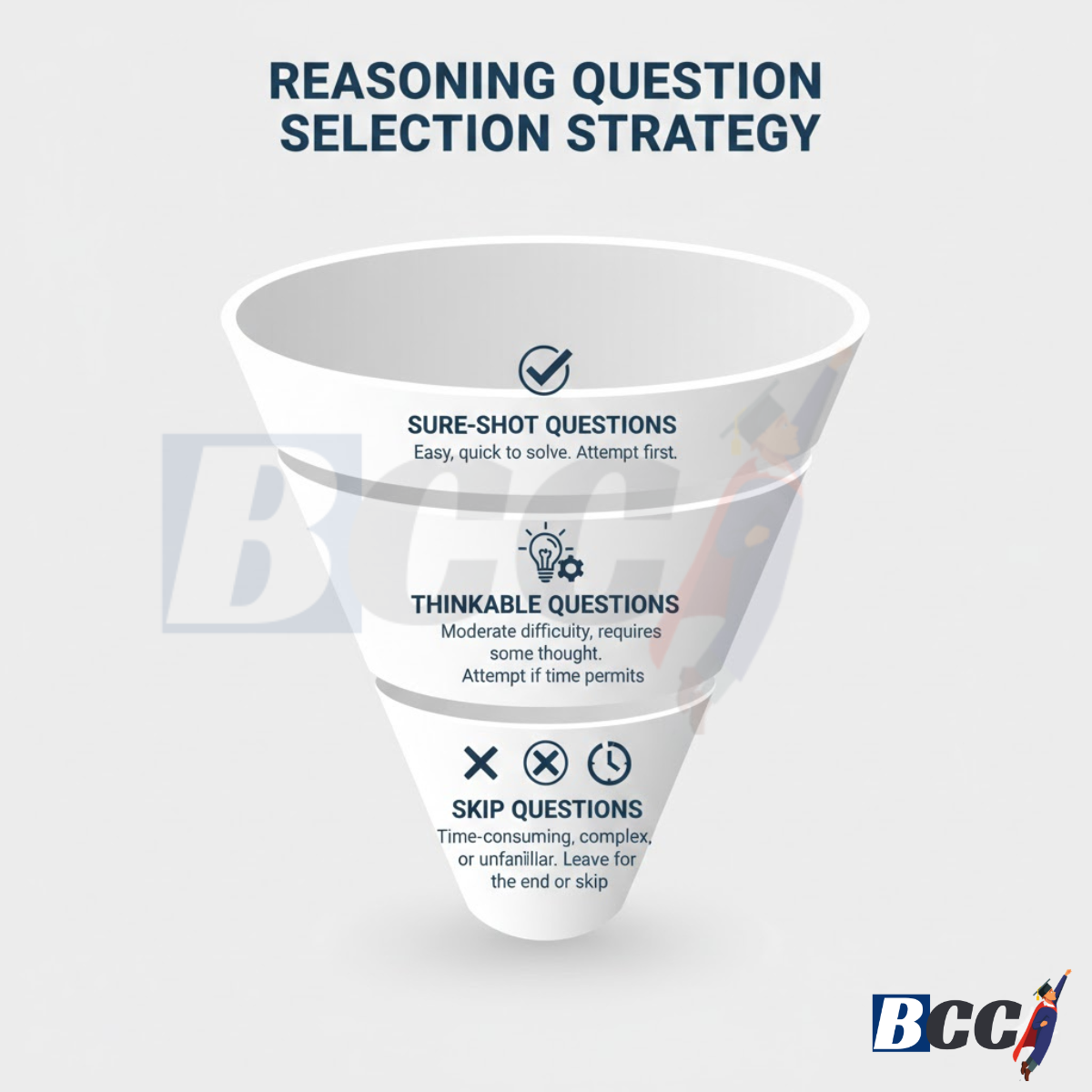
Reasoning is a scoring section, but it can waste time if you attempt lengthy questions.
What to Study (High ROI)
- Series (number + alphabet)
- Analogy
- Classification
- Coding-Decoding
- Direction & Distance
- Blood relation
- Syllogism (basic)
- Venn diagrams
- Order ranking
- Sitting arrangement (basic)
What to Skip
- Very lengthy puzzle sets
- Unfamiliar pattern-based reasoning
- Time-consuming critical reasoning questions
Reasoning is about:
- quick selection
- accuracy
- speed
English: What to Study and What to Skip
English is the section where revision can quickly increase marks.
What to Study
- Vocabulary from PYQs
- One-word substitutions (common)
- Synonyms/Antonyms
- Spotting errors (basic grammar rules)
- Sentence improvement
- Cloze test
- Reading comprehension practice (short)
What to Skip
- New advanced grammar books
- Very long editorial reading without question practice
- Memorising rare idioms
In the last 30 days, English improvement should be:
- practice-based
- PYQ-driven
- revision-heavy
General Awareness / General Science: What to Study and What to Skip
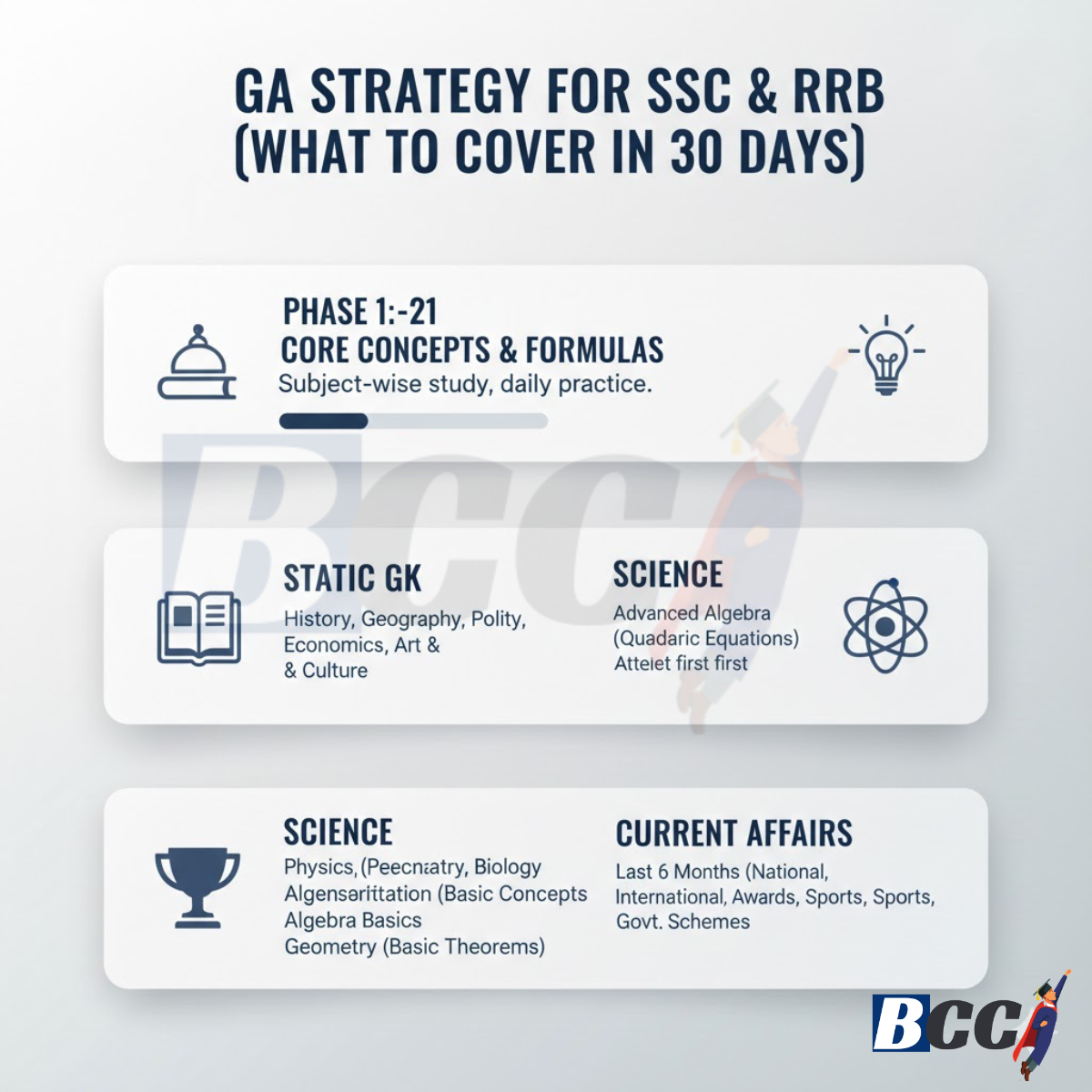
GA decides the cutoffs in SSC and RRB. But the GA preparation fails due to a lack of revision.
What to Study (Most Important)
Static GK
- Indian Polity basics
- Geography (India-focused)
- History (Modern + freedom movement)
- Important days and dates
- Sports and awards
Science (RRB is heavier)
- Human body
- Nutrition
- Diseases
- Heat, electricity
- Acids, bases, metals
Current Affairs (Selective)
- Last 6 months (minimum)
- Government schemes
- Appointments
- Sports events
- Important summits
What to Skip
- Reading the daily news in detail
- Deep international politics
- Too many monthly PDFs without revision
GA is not about reading. It is about remembering.
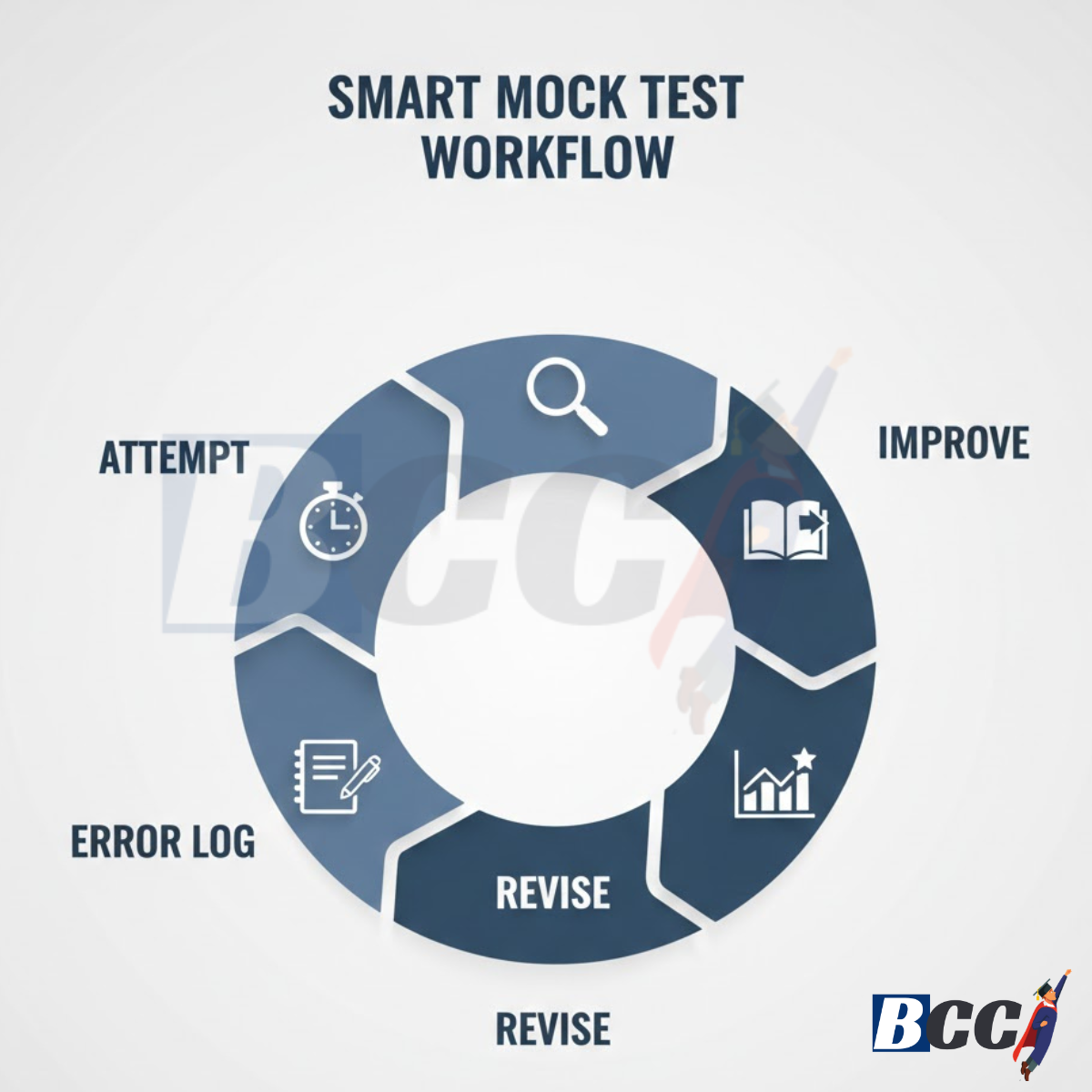
Mock Test Planning: The Most Important Part of the Last Month
Mocks are not only for practice. They are for score improvement.
How Many Mocks in 30 Days?
A realistic plan:
- 15 sectional tests
- 8–10 full mocks
- Daily PYQs
This is enough for improvement.
Best Mock Strategy
- Attempt mock seriously
- Note time wasted sections
- Track wrong answers
- Revise weak topics
- Re-attempt similar questions
The Daily Plan (Last 30 Days)
Daily Minimum Plan (4–6 Hours)
If you are a full-time aspirant:
- 90 min: Quant practice
- 60 min: Reasoning
- 60 min: English
- 60 min: GA + Science
- 30 min: Revision of short notes
- 30 min: PYQs / sectional test
Daily Plan (2–3 Hours) for Working Aspirants
- 60 min: Quant/Reasoning (alternate days)
- 45 min: GA + Science
- 45 min: English + error revision
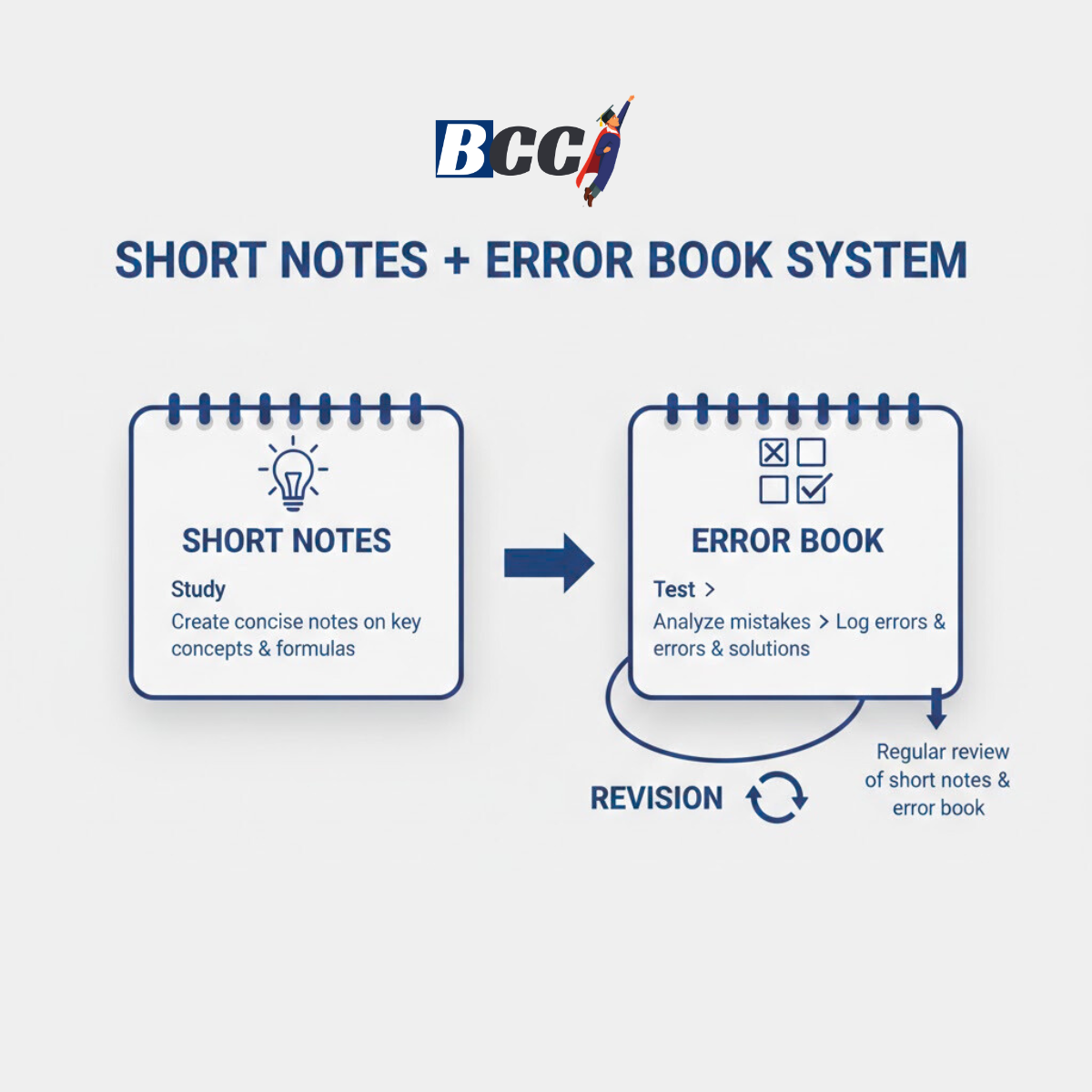
The Most Effective Revision Method: Short Notes + Error Book
Why Short Notes Work
Short notes help in:
- quick revision
- fast recall
- exam day confidence
- Repeated revision cycles
What to Write in Short Notes
- Maths formulas
- common reasoning patterns
- grammar rules
- GA one-liners
- science key points
- current affairs lists
Error Book (Must Have)
Maintain a notebook for:
- repeated mistakes
- wrong formulas
- tricky questions
- confusing GA facts
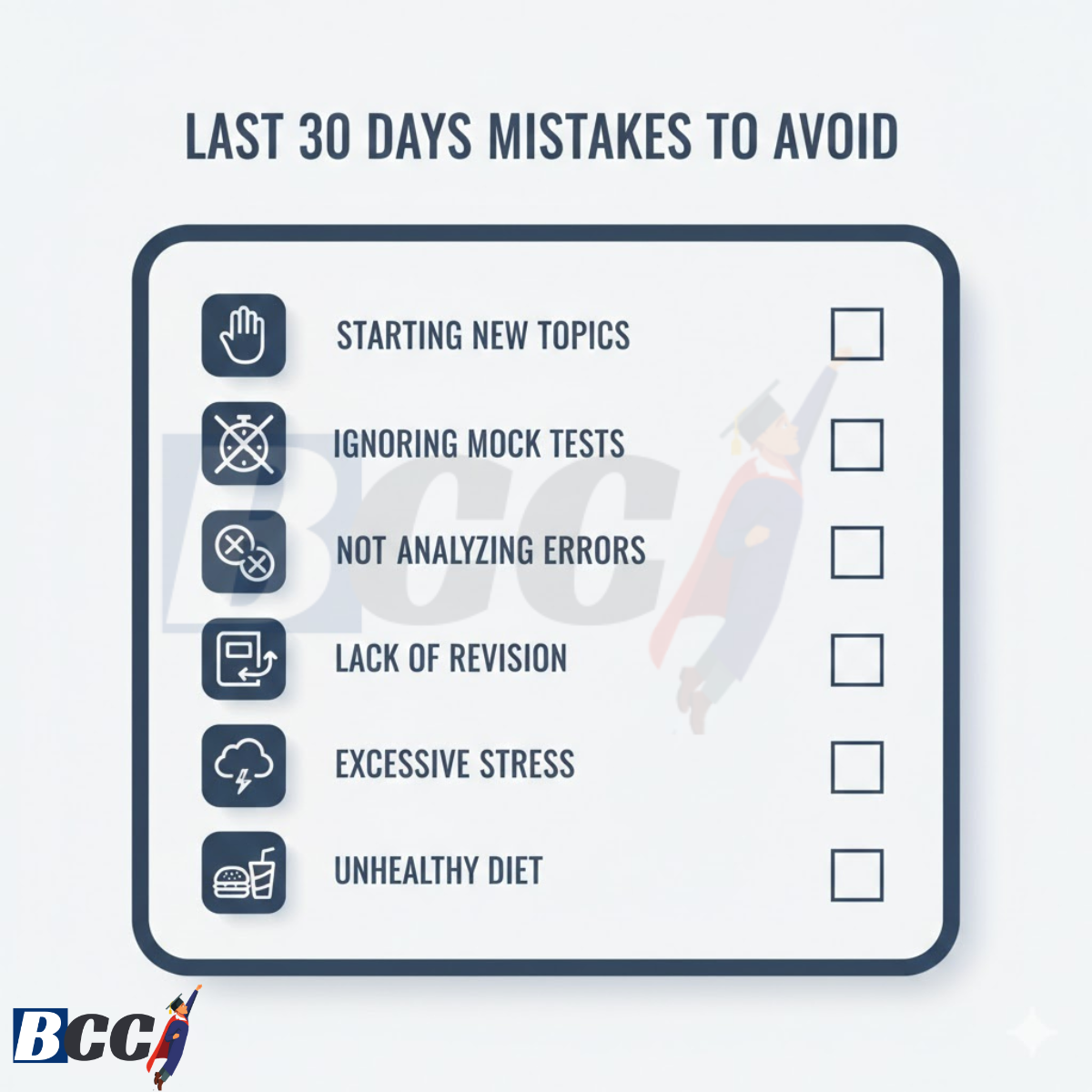
What to Completely Avoid in the Last 30 Days
Many aspirants lose marks due to wrong final-month decisions.
Avoid These Mistakes
- Starting new books
- Changing strategy every 2 days
- Doing mocks without analysis
- Ignoring GA revision
- Practising only strong topics
- Overthinking cutoffs daily
- Studying for 12 hours and burning out
Final 7 Days Plan (Most Important)
In the last week:
- revise only short notes
- revise error book daily
- attempt 2–3 final mocks
- focus on accuracy
- sleep properly
Exam Day Strategy Reminder
- Do not attempt risky questions
- Keep accuracy above 80%
- Select questions smartly
Conclusion: Last 30 Days Decide Your Selection
SSC and RRB selection is not decided by who studies the most. It is decided by who revises smartly and performs calmly in the exam.
In the last 30 days, your focus must be:
- revision of high-scoring topics
- PYQs
- mock planning
- error elimination
- strong GA recall
If you follow a structured 30-day plan, you can improve your score significantly and clear the cutoff with confidence.
FAQs
Q1. How many mocks should I attempt in the last 30 days for SSC or RRB?
8–10 full mocks and 15 sectional tests are sufficient if you analyse properly.
Q2. Should I study new topics in the last month?
No. Focus on revising high-scoring topics and improving accuracy.
Q3. How many months of current affairs are enough for SSC and RRB?
At least the last 6 months, revised multiple times.
Q4. What is the best way to improve score quickly in the final month?
PYQs + mock analysis + error notebook revision.
Q5. How to reduce silly mistakes in Quant and Reasoning?
Maintain an error book, revise it daily, and practise timed sectional tests.