
The Future of Hybrid Work in India: Post-Pandemic Corporate Strategies and Management Challenges
- Date: 28 January 2026
- Target Audience: MBA aspirants, CAT/XAT/NMAT/SNAP students, HR/Management enthusiasts
- Exam Relevance: GD/PI topics, MBA entrance exams, current affairs, case studies, management strategy
Introduction
The concept of hybrid work—a mix of office-based and remote working—is now a mainstream strategy in Indian corporates. The post-pandemic corporate landscape in 2026 has accelerated digital adoption, flexible HR policies, and employee-centric management practices.
Hybrid work is not just a temporary adjustment; it has become a strategic lever for companies to improve productivity, optimize costs, and retain talent. For MBA aspirants, understanding hybrid work dynamics is crucial for GD/PI discussions, essay writing, and case analysis questions in exams like CAT, XAT, NMAT, SNAP, and MBA CET.
Why Hybrid Work is the Future
1. Employee Expectations and Talent Retention
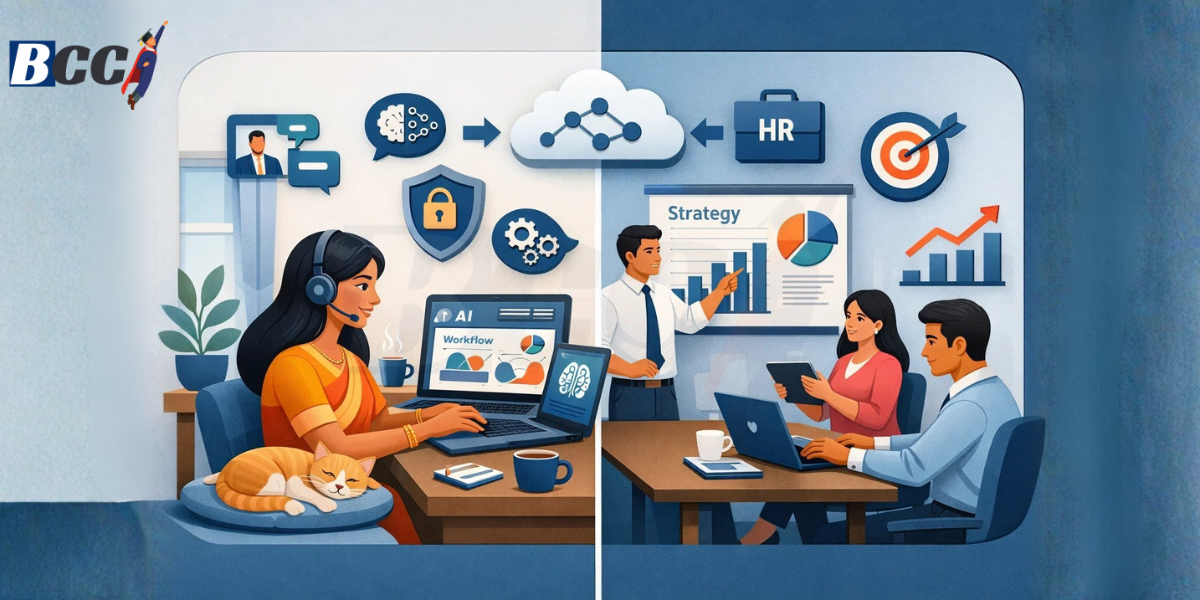
- Employees increasingly prioritize flexibility, work-life balance, and mental health support.
- Companies adopting hybrid models report higher employee satisfaction and reduced attrition, especially in tech, consulting, and BFSI sectors.
2. Cost Optimization and Real Estate Savings
- Reduced office footprint leads to lower real estate and utility expenses.
- Savings can be redirected to technology adoption, employee training, and ESG initiatives.
3. Increased Productivity and Flexibility
- Hybrid work enables employees to focus on deep work remotely and collaborate effectively in office meetings.
- Organizations using AI-driven workflow and productivity tools have reported 10–15% increase in operational efficiency.
Corporate Strategy and Organizational Implications
a. HR & Organizational Behaviour
- Redefining performance evaluation metrics for remote and hybrid teams.
- Ensuring employee engagement, collaboration, and organizational culture in a dispersed workforce.
- Adopting flexible leave policies and wellness programs to sustain morale.
b. Technology Adoption
- Implementation of collaboration tools (Microsoft Teams, Slack, Google Workspace) and AI-driven workflow management systems.
- Importance of cybersecurity, cloud infrastructure, and seamless digital communication.
c. Leadership & Change Management
- Hybrid work requires leaders to monitor outcomes rather than hours logged.
- Leading cultural transformation, inclusivity, and communication protocols becomes critical.
- Emphasis on empathy-driven leadership and digital coaching.
Case Studies: Indian Corporations Leading Hybrid Work
- Infosys
- Implemented ‘Infosys Flex’, which allows employees to work remotely 50% of the time.
- Focused on digital skilling, performance-based evaluation, and employee engagement programs.
- Tata Consultancy Services (TCS)
- TCS introduced 100% remote work options for select roles under “Work from Anywhere” policy.
- Leveraged AI-driven productivity dashboards and employee wellness programs.
-
HDFC Bank
- A hybrid approach in back-office operations and corporate functions.
- Enhanced employee satisfaction while reducing operational costs.
Challenges in Hybrid Work Implementation
-
Maintaining Corporate Culture
-
Risk of employees feeling disconnected from organizational ethos.
-
-
Performance Measurement
-
Traditional metrics may fail; requires outcome-based evaluation.
-
-
Digital Inequality
-
Employees with poor connectivity or lack of proper devices face productivity challenges.
-
-
Data Security & Compliance
-
Remote access increases cybersecurity vulnerabilities.
-
MBA Exam Relevance
- GD/PI Topics:
- “Is Hybrid Work the Future of Indian Corporates?”
- “Managing Talent in a Flexible Work Environment”
- Essay Writing:
- “Digital Transformation and Hybrid Work Models in India”
- “Leadership Challenges in Post-Pandemic Workplaces”
- Case Studies (CAT/XAT/NMAT/SNAP):
- Analyze Infosys, TCS, HDFC Bank hybrid policies.
- Recommend strategies to enhance productivity, employee engagement, and cost efficiency.
Actionable Strategies for Organizations
- Design flexible policies balancing remote and office work.
- Implement robust digital infrastructure and cybersecurity.
- Focus on employee engagement, wellbeing, and career development.
- Train managers in outcome-based leadership and digital coaching.
- Use data analytics and AI tools to monitor performance effectively.
Conclusion
Hybrid work in India is no longer optional; it is a strategic necessity for corporations aiming to attract talent, optimize costs, and enhance productivity. For MBA aspirants, understanding the interplay of corporate strategy, HR management, technology adoption, and leadership challenges in hybrid models provides a valuable edge for exams, interviews, and business insights.
Organizations that embrace hybrid work with structured strategy, robust technology, and employee-centric policies are likely to thrive in the evolving post-pandemic landscape.
FAQs — Hybrid Work in India 2026
Q1. What is hybrid work?
A: Hybrid work is a flexible work model where employees split their time between remote work and office-based work, allowing a balance between collaboration and independent productivity.
Q2. Why is hybrid work becoming popular in India post-pandemic?
A: Companies are adopting hybrid models to retain talent, improve productivity, optimize office costs, and address employee preferences for flexibility and work-life balance.
Q3. Which Indian companies are leading in hybrid work adoption?
A: Key examples include:
- Infosys – ‘Infosys Flex’ program with 50% remote work options.
- TCS – ‘Work from Anywhere’ for select roles.
- HDFC Bank – Hybrid model for back-office and corporate functions.
Q4. What are the main challenges of hybrid work for organizations?
A: Major challenges include:
- Maintaining corporate culture and engagement.
- Measuring performance with outcome-based metrics.
- Ensuring digital connectivity and security.
- Supporting employee wellbeing and career development.
Q5. How is hybrid work relevant for MBA entrance exams and GD/PI sessions?
A: Hybrid work is a highly relevant current affairs and management topic for MBA exams:
- Case study analysis in CAT/XAT/NMAT/SNAP.
- GD/PI discussions on organizational strategy and leadership.
- Essay topics on post-pandemic corporate transformation, HR policies, and digital adoption.
Q6. How can companies implement hybrid work successfully?
A: Key strategies include:
- Designing structured, flexible policies.
- Using AI and digital tools for monitoring productivity.
- Training managers for outcome-based leadership.
- Focusing on employee engagement, wellness, and skill development.