
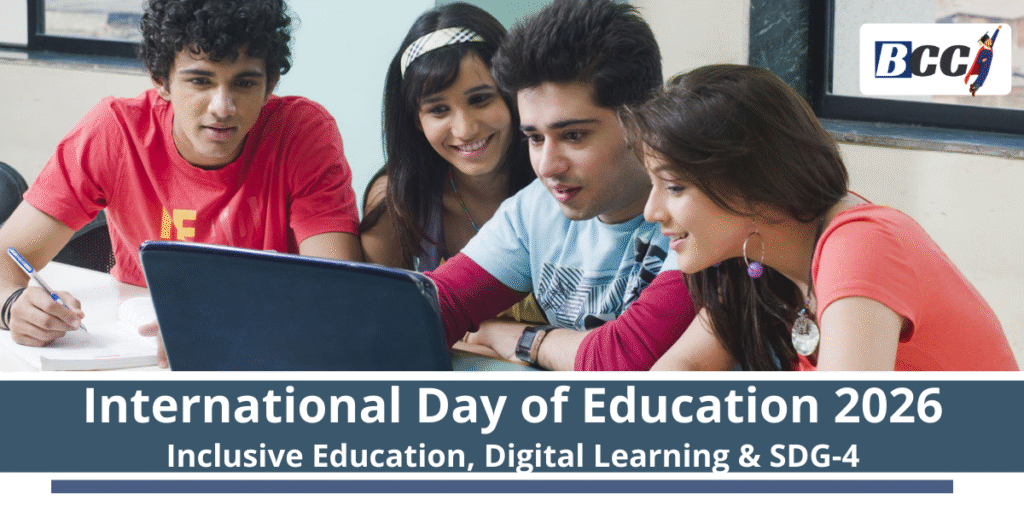
International Day of Education 2026: Inclusive Education, Digital Learning & SDG-4
Observed on: 24 January
Focus: Inclusive Education, Digital Learning, and SDG-4
Exam Relevance: Education Policy, Global Initiatives, UN Observances, Sustainable Development Goals
Introduction
The International Day of Education, observed every year on 24 January, highlights the central role of education in promoting sustainable development, social justice, economic growth, peace, and innovation. Proclaimed by the United Nations General Assembly (UNGA) in 2018, this day emphasizes the global commitment to ensuring inclusive, equitable, and quality education for all learners.
In 2026, the observance focuses strongly on inclusive education, digital transformation in learning, and the achievement of Sustainable Development Goal 4 (SDG-4). The day serves as a reminder that education is not only a fundamental human right but also a powerful driver of national progress and global stability.
Why Education Matters in the Global Context
Education is widely recognized as a cornerstone of development. It contributes to:
- Poverty reduction and employment generation
- Gender equality and women’s empowerment
- Innovation and technological advancement
- Democratic participation and good governance
- Social mobility and inclusive growth
- Peacebuilding and conflict resolution
Without strong education systems, countries struggle to achieve long-term economic growth and social stability. Therefore, global cooperation on education policy remains a priority agenda at the United Nations and other international forums.
Background of the International Day of Education
The United Nations General Assembly declared 24 January as the International Day of Education in December 2018. The resolution acknowledges education as a fundamental human right and calls on nations to improve learning systems and address educational inequalities.
Key Reasons Behind the Declaration
- Millions of children remain out of school
- Learning poverty affects basic reading and numeracy skills
- Inequalities persist across gender, income, and geography
- Need to align education with future job markets and the digital economy
Core Focus Areas in 2026
1. Inclusive Education
Inclusive education ensures that no learner is left behind, particularly:
- Girls and women
- Children with disabilities
- Rural and tribal communities
- Economically weaker sections
- Refugees and migrants
The goal is to remove barriers related to gender, disability, language, poverty, and location, enabling every child to access quality education.
2. Digital Learning and Technology Integration
The rise of digital education has transformed traditional classrooms. In 2026, emphasis is placed on:
- Online learning platforms
- Artificial Intelligence in Education
- Smart classrooms and blended learning models
- Digital teacher training
- Bridging the digital divide between urban and rural regions
Digital learning has become essential for ensuring continuity of education during disruptions such as pandemics or natural disasters.
3. Sustainable Development Goal 4 (SDG-4)
SDG-4 Objective:
Ensure inclusive and equitable quality education and promote lifelong learning opportunities for all.
Key SDG-4 Targets
- Universal primary and secondary education
- Equal access to technical, vocational, and higher education
- Youth and adult literacy improvement
- Increased supply of qualified teachers
- Safe and effective learning environments
Achieving SDG-4 is essential for meeting other SDGs related to poverty eradication, gender equality, economic growth, and climate awareness.
India’s Education Priorities and Policy Framework
India aligns its national education goals with global education targets through policy reforms and welfare schemes.
1. National Education Policy (NEP) 2020
NEP 2020 aims to transform India’s education system by focusing on:
- Holistic and multidisciplinary learning
- Early childhood care and foundational literacy
- Skill-based and vocational education
- Digital education and EdTech integration
- Teacher training and curriculum modernization
2. Major Government Initiatives
- Samagra Shiksha Abhiyan – Universal school education
- PM eVIDYA – Digital and distance learning
- DIKSHA Platform – Teacher and student digital resources
- PM POSHAN (Mid-Day Meal) – Nutrition support to improve learning
- Skill India Mission – Vocational training and employability
Role of Education in Economic and Social Development
Education contributes directly to:
Economic Growth
- Enhances workforce productivity
- Supports entrepreneurship and innovation
- Improves job readiness and employability
Social Justice
- Reduces inequality and discrimination
- Empowers marginalized communities
- Promotes social mobility
Democratic Strengthening
- Encourages civic awareness and participation
- Strengthens constitutional values and critical thinking
Global Competitiveness
- Builds a knowledge-driven economy
- Promotes scientific research and technological leadership
Challenges in Achieving Universal Quality Education
Despite progress, major challenges persist globally and in India:
Structural Challenges
- School dropout rates
- Teacher shortages
- Poor infrastructure in rural areas
Digital Challenges
- Internet accessibility gap
- Lack of digital devices
- Limited digital literacy
Social Challenges
- Child labor
- Gender bias
- Poverty and migration
Learning Challenges
- Learning poverty
- Rote-based education
- Lack of practical and life skills
Exam Relevance for Competitive Exams
UPSC Prelims
- UN observance days
- SDGs and global education goals
- Education-related government schemes
- NEP 2020 highlights
UPSC Mains
- GS Paper II – Education policy, governance
- GS Paper IV – Ethics, equality, human development
- Essay – Role of education in nation-building
SSC, Banking, RRB
- Important days and dates
- Static GK and government initiatives
- UN agencies and global programs
Expected Question Trends
High-Probability Areas
- Year of declaration (2018)
- SDG-4 objectives
- India’s education schemes
- NEP 2020 reforms
- Digital education initiatives
Sample Prelims MCQs
Q1. International Day of Education is observed on:
A. 5 January
B. 24 January
C. 15 February
D. 10 March
Answer: B
Q2. Which Sustainable Development Goal relates to Education?
A. SDG-3
B. SDG-4
C. SDG-5
D. SDG-8
Answer: B
Q3. NEP 2020 focuses on which of the following?
A. Skill-based learning
B. Digital education
C. Multidisciplinary education
D. All of the above
Answer: D
Quick Revision Box
- Date: 24 January
- Declared by: UN General Assembly (2018)
- Core Focus: Inclusive and quality education
- Linked SDG: SDG-4
- India Policy: NEP 2020
- Digital Focus: AI, EdTech, online learning
Conclusion
The International Day of Education 2026 reinforces the idea that education is the foundation of human development, economic growth, and social harmony. With growing emphasis on digital learning, inclusion, and lifelong education, countries must strengthen their education systems to meet global development targets.
For competitive exam aspirants, understanding education policy, global initiatives, and SDG-4 is crucial, as questions frequently appear in Prelims, Mains, and interview stages. A strong grasp of education-related current affairs also enhances answers in ethics, governance, and essay papers.